
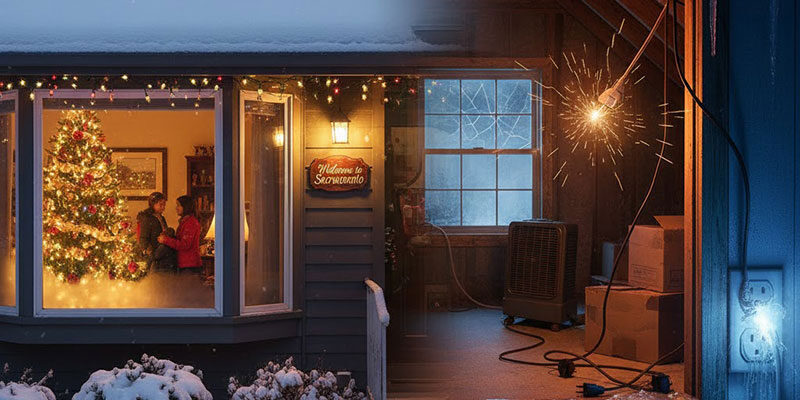
November arrives, temperatures drop into the 40s and 50s, rain becomes a regular visitor, space heaters come out of storage, and holiday lights start appearing on homes throughout Sacramento and Placer County. It’s a season of warmth, celebration, and family gatherings—but it’s also when winter electrical hazards spike dramatically.
I’m Brandon from Magic Sun Electric, and our winter service calls tell a consistent story: space heater-related circuit overloads, holiday lighting creating electrical issues, outdoor outlets exposed to rain causing problems, and power surges when storms knock out electricity then restoration brings it back. Many of these issues are completely preventable with awareness and proper precautions.
Sacramento winters may not match the brutal cold of the Midwest or East Coast, but we face our own electrical challenges. Our rainy season runs from November through March, occasional storms bring wind and lightning, and temperature drops mean supplemental heating throughout the region. While this article focuses on winter concerns most relevant from November through February, many of these electrical safety issues can occur year-round.
Let me walk you through the most important winter electrical safety considerations for Sacramento area homes, starting with the single biggest hazard: space heaters.
Sacramento Winter Weather: What We Actually Face
Sacramento winters bring their own set of conditions that affect your home’s electrical system. Our rainy season delivers consistent precipitation from November through March. Occasional severe storms bring wind that can knock down power lines and lightning that creates surge events. Temperatures drop into the 40s and 50s regularly, occasionally dipping into the 30s during cold snaps. Wet conditions can persist for days or weeks at a time.
These conditions create electrical implications throughout your home. Space heaters supplement central heating, putting additional load on circuits. Holiday lighting exposes outdoor electrical components to wet conditions. More time spent indoors means increased electrical usage overall. Storm-related power outages are followed by restoration surges. Moisture affects outdoor electrical components, outlets, and connections.
Sacramento homes are particularly vulnerable because many older homes in Carmichael, Fair Oaks, and Auburn weren’t designed for heavy supplemental heating loads. Outdoor outlets and lighting may lack proper weather protection. Many homeowners are unfamiliar with managing increased winter electrical loads. The mix of generally mild weather with occasional extremes catches people unprepared for the electrical demands of true winter conditions.
The #1 Winter Electrical Hazard: Space Heaters
Let me be direct: space heaters are involved in 79% of home heating fire deaths according to the National Fire Protection Association. Sacramento fire departments respond to space heater-related incidents every winter. The vast majority of these incidents are completely preventable.
Why Space Heaters Are So Dangerous
Space heaters are dangerous for several reasons. They draw high power—typically 1,500 watts, which is a significant electrical load. They’re often plugged into circuits that are inadequate for that load. People frequently use extension cords with them, which is a major fire hazard. They’re placed too close to combustible materials like curtains, furniture, and bedding. They’re left unattended or running overnight. And many people use old or damaged units that should have been replaced years ago.
Safe Space Heater Use: Electrical Safety
First and foremost: plug space heaters directly into wall outlets. Never use extension cords or power strips with space heaters—the high current draw can overheat the cord and cause fires. Use only one space heater per circuit. Don’t combine a space heater with other high-draw devices like hair dryers, microwaves, or other heaters on the same circuit.
Use only outlets with proper grounding—that means three-prong outlets for three-prong plugs. Check the space heater cord for any damage before each use. If a breaker trips repeatedly when you use a space heater, that circuit cannot safely handle the load. Don’t keep resetting the breaker—call an electrician to assess whether you need a dedicated circuit or if there’s another issue.
Safe Space Heater Use: Placement and Operation
Maintain a three-foot clearance from anything combustible. This means curtains, furniture, bedding, papers, decorations—anything that can burn. Never use space heaters in bathrooms where water and electricity create extreme danger. Place heaters on flat, stable surfaces, never on furniture that could tip over.
Use only modern units with tip-over switches and overheat protection. These safety features can prevent fires if the heater tips over or overheats. Never run space heaters while sleeping or when leaving home. Keep space heaters away from children and pets who might knock them over or get too close.
When to Call an Electrician About Space Heaters
Call us if breakers trip when using a space heater, if you need additional circuits installed for safe space heater use, if outlets feel warm when a space heater is plugged in, if lights flicker when the heater runs, or if you want to add permanent electric baseboard heating as a safer alternative to portable space heaters.
I see too many space heater-related electrical issues every winter. The most common mistake? Plugging a 1,500-watt space heater into a circuit that’s already serving multiple outlets—maybe a bedroom circuit powering a TV, computer, phone chargers, and lamps—then wondering why the breaker trips. If you’re using space heaters, make sure your electrical circuits can handle the load safely.
"Magic Sun Electric is an outstanding company. Chad Hurlock is so responsive. The electricians who came to replace two panels (as well as a few other items) were the most respectful, intelligent, fair and professional electricians. My number one priority was safety (in a very old home) and at every step of the repair process Chad’s team consulted me."
— Stacy H., Rocklin, CA
Holiday Lighting: Safe and Festive
We’re entering the holiday season right now, and homes throughout Roseville, Granite Bay, Folsom, and Sacramento are being decorated with lights. Holiday lighting is festive and beautiful, but it also creates electrical hazards if not done properly.
Common Holiday Lighting Hazards
The most common problems we see are overloaded circuits from excessive decorations, outdoor lights exposed to rain without proper protection, extension cords that aren’t rated for outdoor use, damaged light strings that people use anyway "because they mostly still work," and confusion about which lights and cords are safe for indoor versus outdoor use.
Safe Outdoor Holiday Lighting
Use only lights and extension cords that are specifically rated for outdoor use—they’re designed to handle moisture and temperature extremes. Check all light strings for damage before hanging them. Look for frayed wires, cracked sockets, or loose connections. Don’t overload circuits—check the amperage ratings on your light strings and add them up. A typical 15-amp circuit can handle about 1,440 watts.
Use GFCI-protected outlets for all outdoor decorations. This is required by code and critical for safety. Keep electrical connections off the ground and protected from moisture—elevated connections in weatherproof covers work best. Never staple or nail through cords, which can damage insulation and create shock or fire hazards.
Safe Indoor Holiday Lighting
LED lights are your best choice—they reduce fire risk dramatically and use a fraction of the energy of old incandescent strings. Don’t daisy-chain too many light strings together. Follow the manufacturer’s limits, which are usually printed on the packaging. Keep all holiday lighting away from combustible materials like curtains, paper decorations, and dried greenery.
Turn off holiday lights when leaving home or going to sleep. Check for warm outlets or flickering lights, which indicate overloaded circuits.
Extension Cord Safety
For outdoor use, choose 14-gauge or heavier extension cords that are specifically rated for outdoor conditions. For indoor use, use cords appropriate for the electrical load. Never use cords with fraying, cuts, or any damage. Don’t run extension cords under rugs or through doorways where they can be damaged. Remember that extension cords are for temporary use only—they’re not a permanent wiring solution.
Smart Solutions
Timers prevent leaving lights on all night, reducing both fire risk and energy waste. Smart plugs allow you to control lights remotely from your phone. GFCI outlets are required for outdoor use and provide critical protection against shocks.
Call an electrician if you need additional outdoor outlets for decorations, want permanent holiday lighting circuits installed, have existing outlets that lack GFCI protection, or if breakers trip when you plug in your holiday lighting.
Wet Weather Electrical Concerns
Sacramento’s rainy season runs from November through March, and our outdoor electrical components face extended exposure to moisture. Water and electricity create dangerous combinations—potential for shorts, shocks, and fires.
Outdoor Outlet Protection
GFCI protection is required by code for outdoor outlets, and for good reason. Weather-resistant covers—specifically "in-use" covers that protect outlets even when cords are plugged in—are essential. Proper installation and sealing around outdoor electrical boxes prevents moisture infiltration. Test your GFCI outlets monthly using the test and reset buttons. If outdoor outlets trip frequently during rain, that’s a sign of a problem that needs professional attention.
Common Wet Weather Issues
Standing water near outdoor outlets creates shock hazards. Moisture infiltration into electrical boxes can cause shorts and corrosion. Extension cords lying in puddles or wet grass are extremely dangerous. Damaged weatherproofing allows water entry into electrical components. Corroded connections from repeated moisture exposure reduce safety and reliability.
Pool and Spa Equipment
GFCI protection is absolutely critical for pool and spa equipment. Keep all electrical components as dry as possible. Never use your pool or spa during electrical storms. Have equipment inspected regularly, especially before winter when you might be using your spa more frequently.
Outdoor Lighting and Wiring
Landscape lighting, security lighting, and any outdoor electrical installations need proper weather sealing. Sacramento’s wet winters demand reliable protection for all outdoor electrical components.
Professional Inspection Recommendations
Before winter fully arrives, check all outdoor outlets for damage or corrosion. Test GFCI function on every outdoor outlet. Look for any corrosion or visible damage to outdoor electrical components. Ensure covers are intact and properly sealed. Address any issues before the heavy rains arrive.
We can inspect your outdoor electrical systems, ensure proper GFCI protection throughout, upgrade weatherproofing where needed, and make sure everything is ready for Sacramento’s wet winter months. Learn more about our electrical safety services on our electrical services page.
Storm Preparation and Power Surge Protection
Sacramento winter storms bring wind that knocks down power lines, occasional lightning, tree branches hitting lines, and power outages followed by restoration surges when electricity comes back on.
Before the Storm
The most important preparation is ensuring you have whole-house surge protection installed. When power is restored after an outage, the surge that accompanies restoration can damage unprotected electronics and appliances throughout your home. We covered surge protection extensively in a previous article—if you don’t have whole-house protection, it’s worth considering before winter storms arrive.
Have flashlights and batteries ready so you’re not fumbling in the dark. Know where your main electrical breaker is located. Charge phones and devices when storms are forecast. Consider backup power options for essential devices like medical equipment or refrigeration.
During Power Outages
Turn off or unplug sensitive electronics like computers, TVs, and smart home equipment if you have time before power goes out. Leave one light switched on so you’ll know when power returns. Don’t open your refrigerator or freezer unnecessarily—they’ll maintain temperature longer if you keep them closed.
Never use generators indoors—carbon monoxide poisoning is a real danger. Gas generators must be used outside only, positioned at least 20 feet from your house with exhaust pointing away from all buildings.
When Power Returns
With whole-house surge protection, you don’t need to do anything—the system automatically protects your home from restoration surges. Without surge protection, wait 5-10 minutes before reconnecting sensitive electronics to allow the grid to stabilize. Check GFCI outlets throughout your home, as they may need resetting after power restoration.
Backup Power Options
For urban Sacramento homes, options include portable gas generators (must be used outdoors only, proper ventilation critical), battery backup systems (quiet, safe for indoor use, but limited capacity), and whole-home automatic generators (expensive, more common in rural areas). For most urban Sacramento residents, battery backup for essential devices is the most practical option.
Tree Trimming
Keep trees trimmed away from power lines to prevent outages and dangerous situations. PG&E is responsible for trimming near main power lines, but you’re responsible for vegetation near the service line running from the street to your house.
"It’s really hard to find great electricians who are top professionals and can figure out and solve problems so easily. Chad and the folks at Magic Sun are those kind of people! Great value, great service and I would highly recommend them to anyone living in Placer County. They’ve done our yard outdoor lighting, indoor ceiling fans, multiple TV Mounts and installs, and we are so pleased with how everything has turned out."
— Dan D., Granite Bay, CA
Additional Winter Electrical Concerns
Electric fireplaces present the same circuit load concerns as space heaters—they typically draw 1,500 watts and need adequate circuits. Your HVAC system works harder in winter, and if the system struggles or trips circuits, it needs professional attention. Furnace maintenance should include inspection of electrical components.
More time spent indoors during winter means increased electrical usage. Home offices run all day, entertainment systems get constant use, cooking happens more frequently at home, and the increased overall electrical load may reveal circuit capacity issues you didn’t notice in summer.
This is particularly true for older homes in Auburn, Carmichael, and Fair Oaks that were built when electrical demands were much lower. Adding space heaters and modern loads can overtax circuits that were adequate decades ago. Winter often reveals these inadequacies, making it a good time to assess your electrical system’s capacity.
Indoor moisture is also a winter concern. Attic moisture can affect electrical wiring. Bathroom humidity necessitates working exhaust fans. Moisture infiltration through walls can affect indoor wiring over time. While not as obvious as outdoor wet weather issues, indoor moisture deserves attention.
Sacramento & Placer County Winter Electrical Checklist
Before Winter Arrives (Ideally October/November)
Test all GFCI outlets, both outdoor and indoor. Inspect outdoor electrical components for damage or corrosion. Check holiday lights for damage before hanging them. Ensure space heaters are in good condition or replace old units. Consider whole-house surge protection if you don’t have it installed. Verify that you have adequate circuits for winter electrical loads. Schedule an electrical safety inspection if you have any concerns.
As Winter Arrives
Use space heaters safely following all the guidelines we discussed. Install holiday lighting properly with appropriate equipment and protection. Monitor circuit loads and don’t overload outlets. Keep outdoor electrical connections dry and protected. Have flashlights and batteries ready for potential outages.
During Storms
Unplug sensitive electronics if you have time and it’s safe to do so. Know where your main breaker is located in case you need to shut off power. Never use gas generators indoors—carbon monoxide kills. Wait for power restoration before reconnecting sensitive equipment if you don’t have surge protection.
After Storms
Check GFCI outlets throughout your home and reset them if necessary. Inspect for any visible damage to electrical components. Address any issues immediately rather than waiting for them to worsen.
Professional Assessment
Magic Sun Electric can inspect your electrical system to identify potential winter hazards, ensure adequate capacity for winter loads, install or upgrade surge protection, add circuits if needed for safe space heater use, and ensure proper outdoor GFCI protection. Visit our FAQ & Resources page for additional electrical safety information.
When to Call Magic Sun Electric
Contact us for winter-related electrical issues including breakers tripping from space heaters or holiday lights, needing additional circuits for winter loads, outdoor outlets requiring GFCI protection or improved weatherproofing, lights dimming when heating runs, outlets that feel warm to the touch, burning smells from outlets or switches, or any electrical concerns before winter storms arrive.
We also provide preventive services including whole-house surge protection installation, comprehensive electrical safety inspections, GFCI outlet installation and testing, additional circuit installation for adequate capacity, outdoor electrical weatherproofing, and electrical panel capacity assessments.
Professional electrical service matters for several reasons: safety when working with electricity, code compliance that protects your investment, proper diagnosis of underlying issues, quality materials and workmanship, and peace of mind throughout the winter season.
We serve Sacramento and Placer County with licensed C10 electricians familiar with local conditions and capable of fast response when you need help. From Sacramento to Auburn, Roseville to Folsom, and throughout the region, we’re here to help.
Stay Safe This Winter
Sacramento winters bring specific electrical challenges that every homeowner should understand. Space heaters represent the number one winter fire hazard—use them safely and never with extension cords. Holiday lighting safety matters, especially now as we’re entering peak decorating season. Wet weather demands proper GFCI protection for outdoor electrical components. Storm preparation should include surge protection before power outages occur.
Many winter electrical issues are completely preventable with awareness and proper precautions. While we’ve focused on concerns most relevant from November through February, these safety considerations can arise year-round in our variable California climate.
Don’t wait for an electrical emergency this winter. Let’s make sure your home is ready for winter electrical demands. We offer free electrical safety assessments to identify potential hazards, ensure your system can handle winter loads safely, install surge protection before storms arrive, and provide professional guidance customized to your home’s specific needs.
Call Magic Sun Electric at (916) 794-0448 or contact us by email to schedule your winter electrical safety assessment. Whether you need circuit additions for space heaters, outdoor GFCI installation, surge protection, or simply want peace of mind that your electrical system is winter-ready, we’re here to help.
Winter in Sacramento brings rain, occasional storms, and increased electrical demands. A few simple precautions and professional assessment can keep your family safe and your electrical system reliable all season long.
Brandon is a C10 licensed electrical contractor (License #953640) and NABCEP certified professional with Magic Sun Electric. With extensive experience serving Sacramento and Placer County homes through winter electrical challenges, he helps homeowners stay safe and maintain reliable electrical systems year-round.