
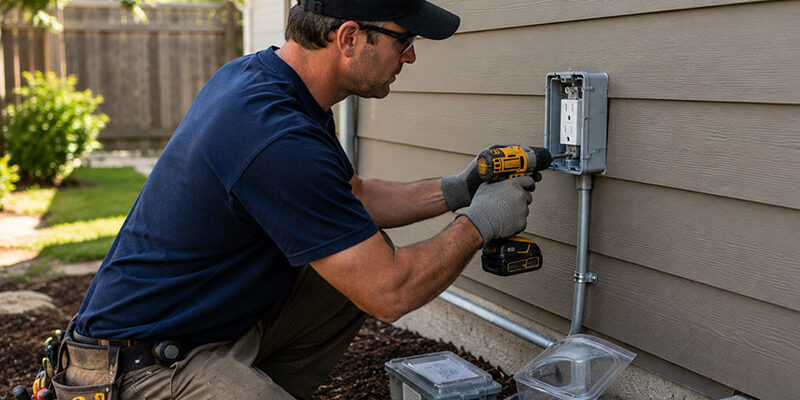
Outdoor outlets get a lot of use around here. They power tools, string lights, patio speakers, holiday decorations, and just about everything else that makes a backyard livable. But every outdoor outlet has one thing working against it that indoor outlets never deal with: moisture. Rain, irrigation, condensation, sun, and everyday physical wear all take a toll on exterior electrical components in ways most homeowners never think about until something stops working.
We tell our customers the same thing every time this comes up: a plastic cover over a standard receptacle is not a safe outdoor outlet. The receptacle, the box, the cover, the wiring, the grounding, and the circuit protection all have to be right for the location. Knowing what “right” looks like can help Sacramento-area homeowners catch a problem before it turns into a shock hazard, a fried appliance, or a dead circuit.
Why Outdoor Electrical Outlets Need Additional Protection
Indoor outlets live in dry, climate-controlled rooms. Outdoor outlets don’t get that luxury. Even a receptacle tucked under a patio cover can end up dealing with wind-driven rain, sprinkler overspray, condensation, dust, insects, and wide temperature swings over the course of a year.
There’s also a bigger safety factor at play outside: grounded surfaces. Someone using a power tool or extension cord outdoors is often standing on wet concrete, damp soil, grass, or a metal ladder. If current escapes from damaged wiring or equipment, that person’s body can become part of the path it travels on its way to the ground. It’s a big reason we take outdoor electrical work as seriously as we do.
In our experience, outdoor electrical problems usually trace back to one of these causes:
- Moisture entering a receptacle or electrical box
- Cracked, missing, or poorly fitted outlet covers
- Corroded terminals and wiring connections
- Damaged extension cords or outdoor equipment
- Loose receptacles and deteriorated mounting surfaces
- Overloaded circuits serving several outdoor devices
- Indoor electrical products being used outside
- Landscape tools, vehicles, rodents, or vegetation damaging wiring
What Is a GFCI Outlet?
A ground-fault circuit interrupter, or GFCI, is one of the most important safety devices in a home’s electrical system. It continuously compares the amount of current flowing out through a circuit to the amount coming back in.
The instant it detects even a small imbalance, it cuts power. That imbalance usually means electricity has found a path it shouldn’t be on, possibly through water, damaged equipment, or a person.
GFCI protection matters even more outdoors because water and grounded surfaces raise both the likelihood and the severity of a shock.
GFCI Protection Versus a Circuit Breaker
A standard circuit breaker and a GFCI do two different jobs. A breaker protects the wiring itself from excessive current caused by an overload or short circuit. A GFCI responds to current escaping from its intended path, which is a different kind of danger entirely.
You typically need both. A circuit breaker is not a substitute for required GFCI protection, and vice versa.
For a closer look at overloaded circuits, short circuits, and other breaker problems, read our guide to why circuit breakers keep tripping.
Does Every Outdoor Outlet Have TEST and RESET Buttons?
Not necessarily, and that catches a lot of homeowners off guard. An outdoor receptacle can be fully GFCI protected even without visible TEST and RESET buttons. Protection may come from:
- A GFCI receptacle at that location
- Another GFCI receptacle installed earlier on the same circuit
- A GFCI circuit breaker in the electrical panel
One correctly wired GFCI device can protect several receptacles downstream of it. Those downstream outlets should still be tested to confirm the protection is actually working. If you’re not sure where your GFCI protection is coming from, that’s exactly the kind of thing one of our electricians can trace for you.
How to Test an Outdoor GFCI Outlet
GFCI devices should be tested according to the manufacturer’s instructions, and it’s a habit worth building. Homeowners can run a basic functional test without removing the receptacle or opening the electrical box.
- Make sure the outlet and surrounding area are dry.
- Inspect the receptacle and cover for visible damage.
- Plug in a small lamp or an approved outlet tester.
- Press the TEST button on the GFCI device.
- Confirm that power to the protected outlet shuts off.
- Press RESET and verify that power returns.
If a GFCI fails to trip, won’t reset, feels warm, makes noise, or shows any sign of water intrusion, stop using it. Those are all symptoms that need a closer look, not a reason to shrug it off.
What If the Outdoor GFCI Will Not Reset?
A GFCI that won’t reset doesn’t automatically mean the receptacle has failed. Often, it’s responding to something else happening on the circuit.
The usual suspects include:
- The circuit breaker is off or has tripped.
- Moisture has entered the receptacle, box, or connected equipment.
- A damaged extension cord or appliance has a ground fault.
- Another GFCI device earlier on the circuit has tripped.
- A downstream outlet or wiring connection is damaged.
- The GFCI receptacle has simply reached the end of its useful life.
Unplug everything connected before trying to reset the device. If it resets only after a particular appliance or cord is disconnected, that’s probably your culprit. A GFCI that keeps tripping shouldn’t be ignored, and it definitely shouldn’t be swapped out for an ordinary outlet just to make the problem go away.
Magic Sun Electric provides electrical troubleshooting and repair for dead outlets, repeated GFCI trips, overloaded circuits, and other residential electrical problems.
Why Outdoor GFCI Outlets Sometimes Trip During Rain
An outdoor GFCI that trips during wet weather may simply be doing its job. Rain or irrigation water reaching an electrical connection can allow a small amount of current to escape, and the GFCI shuts things down before that becomes a bigger problem.
The most common sources of rain-related trips we run into are:
- A cracked or incorrectly installed outlet cover
- A damaged gasket between the cover and electrical box
- Water entering around a wall penetration
- An outdoor cord connection left exposed to rain
- Holiday lights or landscape equipment with damaged insulation
- Corrosion inside the outlet or electrical box
- Irrigation spray directed toward the receptacle
Resetting the GFCI without fixing the source of the moisture is only a temporary patch. The outlet, cover, box, connected equipment, and downstream wiring may all need a look.
Weather-Resistant Outlets and Weatherproof Covers
GFCI protection, weather resistance, and weatherproof covering are related, but they’re not the same thing. A GFCI reduces shock risk, but it does nothing to keep water out of a receptacle or enclosure that isn’t rated for the location.
What Does WR Mean on an Outlet?
Outdoor receptacles are commonly marked “WR,” meaning weather resistant. These devices are built with materials meant to hold up better against moisture, corrosion, sunlight, and Sacramento’s temperature swings.
A standard indoor GFCI receptacle may still provide ground-fault protection, but that alone doesn’t make it suitable for an outdoor location. The entire installation, not just the receptacle, needs to be rated for its environment.
Weatherproof Electrical Boxes and Gaskets
The outlet needs to be mounted in an electrical box approved for the location, securely installed, with a cover gasket that actually seats against the box or mounting surface.
Uneven stucco, siding, masonry, or deteriorated exterior surfaces can create gaps behind an outlet cover that are easy to miss. Water can also work its way in around the wiring penetration if the job wasn’t sealed correctly. That sealing has to protect the opening without trapping moisture inside the enclosure, which is a balance that’s easy to get wrong.
What Is a While-in-Use Cover?
A while-in-use cover, sometimes called an extra-duty or bubble cover, protects an outdoor receptacle while a cord stays plugged in. Unlike a flat cover that only closes when the outlet is empty, an in-use cover leaves room for the plug and cord while still shielding the receptacle from the weather.
These covers matter most for equipment that tends to stay connected, including:
- Holiday and decorative lighting
- Irrigation controllers
- Water features
- Patio equipment
- Outdoor refrigerators
- Landscape lighting transformers
Planning new landscape or security lighting? Our guide to outdoor lighting design covers fixture selection, placement, controls, curb appeal, and security, while this guide sticks to electrical safety.
Do Covered Patios Still Need Weather Protection?
Yes, in most cases. An outlet beneath a porch or patio roof can still be exposed to damp conditions. Wind carries rain further under an overhang than people expect, irrigation water travels farther than it looks like it should, and temperature swings create condensation on their own.
A roof overhead doesn’t turn an outdoor location into an indoor one. The right receptacle, box, cover, and fittings still depend on the outlet’s actual exposure, not just whether it happens to be covered.
How Sacramento Weather Affects Outdoor Electrical Equipment
Sacramento’s long, hot summers and wet winter stretches put different kinds of stress on outdoor electrical equipment throughout the year.
Heat and Sun Exposure
Direct sunlight gradually weakens plastic covers, cord jackets, seals, and other nonmetallic materials. The repeated heating and cooling also causes materials to expand, contract, loosen, or turn brittle over time.
A cover that looked perfectly fine a few years ago can eventually crack or stop sealing the way it should. South- and west-facing installations tend to take the worst of the afternoon sun.
Rain and Irrigation
Outdoor outlets can go dry for most of the year, which means damage can go unnoticed until the first real rainfall hits. Irrigation systems create their own steady source of moisture, especially after landscaping changes or when a sprinkler head drifts out of alignment.
Vegetation, Pests, and Yard Work
Plants can block access to outlets, trap moisture against equipment, and hide a deteriorated cover from view. Rodents chew through exposed wiring more often than people expect, and lawn equipment or garden tools can strike a box or conduit without anyone noticing until later.
Outdoor outlets should stay visible, accessible, securely mounted, and reasonably shielded from physical damage.
Extension Cords Are Not Permanent Outdoor Wiring
Outdoor-rated extension cords are fine for temporary tasks, but they’re not a substitute for permanent receptacles and branch circuits. A cord left in place for weeks or months is far more likely to get damaged, overloaded, soaked, or routed somewhere it shouldn’t be.
When you do need to run an extension cord outdoors:
- Use a cord specifically rated for outdoor use.
- Choose a cord with adequate capacity for the equipment.
- Inspect it for cuts, crushed areas, damaged insulation, and bent prongs.
- Keep plug connections away from standing water.
- Do not run cords through doors or windows where they can be pinched.
- Do not conceal cords under soil, mulch, rugs, or permanent structures.
- Avoid connecting multiple extension cords together.
- Store the cord when the temporary task is complete.
If you find yourself reaching for an extension cord over and over in the same spot, that’s usually a sign the area needs one or more additional outdoor outlets, not a longer cord.
Common Outdoor Outlet Safety Problems
Some outdoor electrical problems are obvious at a glance. Others look completely fine until the outlet is opened up or tested. The issues we see most often include:
- An ordinary indoor receptacle installed outside
- An outlet without confirmed GFCI protection
- A flat cover being used while a cord remains connected
- A broken cover that no longer closes securely
- Loose plugs that fall out of the receptacle
- Rust, corrosion, insects, or debris inside the box
- Improperly sealed openings through siding or stucco
- An outlet positioned in the direct path of irrigation
- Extension cords being used as permanent wiring
- Several high-demand appliances sharing one circuit
- Exposed wiring or conduit damaged by landscaping work
Older homes often have outdoor receptacles that were installed under earlier standards or added without much planning at all. That doesn’t mean every older installation needs to be torn out and rebuilt the moment codes change, but unsafe, damaged, or improperly modified electrical work should be corrected.
Warning Signs an Outdoor Outlet Needs Professional Attention
Stop using an outdoor outlet and call an electrician if you notice:
- Repeated GFCI or circuit breaker trips
- A TEST or RESET button that does not work
- Heat, buzzing, crackling, or a burning odor
- Discoloration, melting, or scorch marks
- Water, rust, or corrosion inside the cover
- A receptacle or box that moves when a plug is inserted
- Intermittent power
- Loose-fitting plugs
- Sparks when equipment is connected
- A missing, cracked, or poorly fitted weatherproof cover
Don’t try to work around repeated trips by removing GFCI protection, installing a bigger breaker, or resetting the device over and over. The safety device is telling you something. It’s worth finding out what.
Outdoor Electrical Safety Checklist
- Test outdoor GFCI devices according to manufacturer instructions.
- Make sure exterior receptacles remain dry, clean, and accessible.
- Replace cracked or damaged covers.
- Look for rust, looseness, discoloration, or insect activity.
- Keep sprinklers directed away from electrical equipment.
- Trim vegetation away from outlets, conduit, and electrical boxes.
- Use only outdoor-rated cords, lights, and appliances.
- Disconnect temporary cords and seasonal decorations when no longer needed.
- Avoid electrical equipment when standing in wet areas.
- Have recurring trips and intermittent power professionally diagnosed.
It’s also worth inspecting outdoor outlets before hanging holiday decorations or reconnecting equipment that’s been sitting unused for months. Our winter electrical safety guide covers more on seasonal loads, extension cords, decorations, and wet-weather electrical concerns.
Frequently Asked Questions About Outdoor GFCI Outlets
Do outdoor outlets need GFCI protection?
Yes, in nearly every case. Outdoor receptacles generally require GFCI protection because of their exposure to moisture and grounded surfaces. That protection can come from the receptacle itself, an upstream GFCI device, or a GFCI circuit breaker.
Can one GFCI protect multiple exterior outlets?
It can. A properly wired GFCI device can protect additional downstream outlets. We still recommend testing each protected outlet individually so you know which device controls it and where to go to reset power.
Can a regular GFCI receptacle be installed outside?
GFCI protection by itself doesn’t make a receptacle suitable for outdoor exposure. The receptacle needs to be rated for the location and installed with the right electrical box, gasket, cover, and wiring method to go with it.
Why does my GFCI trip whenever it rains?
Moisture is likely reaching the outlet, electrical box, connected equipment, or another point downstream. Damaged extension cords and seasonal lighting can cause the same thing. The right move is to find the source rather than keep resetting the device.
Does an outlet under a patio roof need weather protection?
Usually, yes. It can still be exposed to damp conditions, condensation, irrigation, or wind-driven rain. Being covered doesn’t automatically qualify a location for ordinary indoor electrical components.
How long does an outdoor GFCI outlet last?
That depends on product quality, use, weather exposure, installation conditions, and electrical events over its life. We’d rather test a device than guess its age. A GFCI that fails its test or behaves oddly should be evaluated and replaced when needed, regardless of how old it is.
Should I replace a GFCI that keeps tripping?
Not until you know why it’s tripping. The device itself may be defective, but it may also be doing exactly what it’s supposed to do in response to moisture, damaged equipment, or a wiring fault.
When to Contact an Outdoor GFCI Electrician
Homeowners can visually inspect and test accessible GFCI devices on their own, but repairs involving wiring, electrical boxes, circuit protection, or moisture intrusion should go to a qualified electrician.
An outdoor GFCI electrician can confirm whether an outlet has proper ground-fault protection, inspect the weatherproofing, trace upstream and downstream connections, diagnose repeated trips, and recommend the right fix based on the outlet’s location and how it’s actually used.
Magic Sun Electric provides GFCI outlet installation, exterior electrical repairs, circuit troubleshooting, dedicated circuits, and other residential electrical services throughout Greater Sacramento and Placer County.
Properly protected outdoor power makes patios, yards, workshops, and landscaping more convenient without ignoring the risks that come with water and weather. If an exterior outlet is damaged, unreliable, or not adequately protected, it’s better to address it now than to discover the problem in the middle of the next rainstorm or outdoor project.