
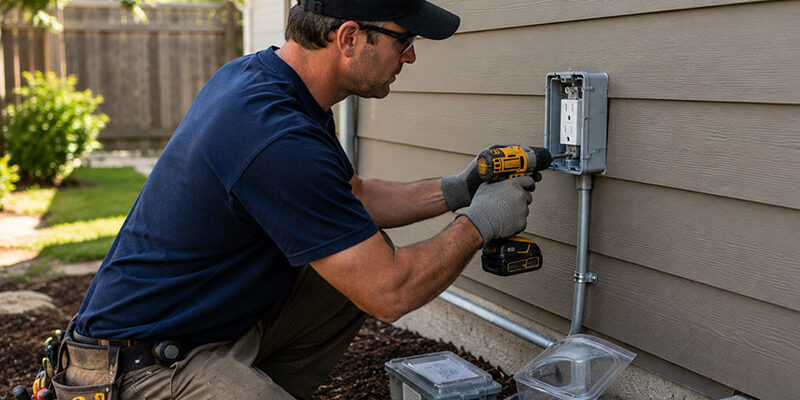
Outdoor GFCI Outlets

Outdoor GFCI Outlets: Weatherproofing, Testing, and Electrical Safety

Outdoor outlets get a lot of use around here. They power tools, string lights, patio speakers, holiday decorations, and just about everything else that makes a backyard livable. But every outdoor outlet has one thing working against it that indoor outlets never deal with: moisture. Rain, irrigation, condensation, sun, and everyday physical wear all take a toll on exterior electrical components in ways most homeowners never think about until something stops working.

We tell our customers the same thing every time this comes up: a plastic cover over a standard receptacle is not a safe outdoor outlet. The receptacle, the box, the cover, the wiring, the grounding, and the circuit protection all have to be right for the location. Knowing what “right” looks like can help Sacramento-area homeowners catch a problem before it turns into a shock hazard, a fried appliance, or a dead circuit.

Why Outdoor Electrical Outlets Need Additional Protection

Indoor outlets live in dry, climate-controlled rooms. Outdoor outlets don’t get that luxury. Even a receptacle tucked under a patio cover can end up dealing with wind-driven rain, sprinkler overspray, condensation, dust, insects, and wide temperature swings over the course of a year.

There’s also a bigger safety factor at play outside: grounded surfaces. Someone using a power tool or extension cord outdoors is often standing on wet concrete, damp soil, grass, or a metal ladder. If current escapes from damaged wiring or equipment, that person’s body can become part of the path it travels on its way to the ground. It’s a big reason we take outdoor electrical work as seriously as we do.

In our experience, outdoor electrical problems usually trace back to one of these causes:

  • Moisture entering a receptacle or electrical box
  • Cracked, missing, or poorly fitted outlet covers
  • Corroded terminals and wiring connections
  • Damaged extension cords or outdoor equipment
  • Loose receptacles and deteriorated mounting surfaces
  • Overloaded circuits serving several outdoor devices
  • Indoor electrical products being used outside
  • Landscape tools, vehicles, rodents, or vegetation damaging wiring

What Is a GFCI Outlet?

A ground-fault circuit interrupter, or GFCI, is one of the most important safety devices in a home’s electrical system. It continuously compares the amount of current flowing out through a circuit to the amount coming back in.

The instant it detects even a small imbalance, it cuts power. That imbalance usually means electricity has found a path it shouldn’t be on, possibly through water, damaged equipment, or a person.

GFCI protection matters even more outdoors because water and grounded surfaces raise both the likelihood and the severity of a shock.

GFCI Protection Versus a Circuit Breaker

A standard circuit breaker and a GFCI do two different jobs. A breaker protects the wiring itself from excessive current caused by an overload or short circuit. A GFCI responds to current escaping from its intended path, which is a different kind of danger entirely.

You typically need both. A circuit breaker is not a substitute for required GFCI protection, and vice versa.

For a closer look at overloaded circuits, short circuits, and other breaker problems, read our guide to why circuit breakers keep tripping.

Does Every Outdoor Outlet Have TEST and RESET Buttons?

Not necessarily, and that catches a lot of homeowners off guard. An outdoor receptacle can be fully GFCI protected even without visible TEST and RESET buttons. Protection may come from:

  • A GFCI receptacle at that location
  • Another GFCI receptacle installed earlier on the same circuit
  • A GFCI circuit breaker in the electrical panel

One correctly wired GFCI device can protect several receptacles downstream of it. Those downstream outlets should still be tested to confirm the protection is actually working. If you’re not sure where your GFCI protection is coming from, that’s exactly the kind of thing one of our electricians can trace for you.

How to Test an Outdoor GFCI Outlet

GFCI devices should be tested according to the manufacturer’s instructions, and it’s a habit worth building. Homeowners can run a basic functional test without removing the receptacle or opening the electrical box.

  1. Make sure the outlet and surrounding area are dry.
  2. Inspect the receptacle and cover for visible damage.
  3. Plug in a small lamp or an approved outlet tester.
  4. Press the TEST button on the GFCI device.
  5. Confirm that power to the protected outlet shuts off.
  6. Press RESET and verify that power returns.

If a GFCI fails to trip, won’t reset, feels warm, makes noise, or shows any sign of water intrusion, stop using it. Those are all symptoms that need a closer look, not a reason to shrug it off.

What If the Outdoor GFCI Will Not Reset?

A GFCI that won’t reset doesn’t automatically mean the receptacle has failed. Often, it’s responding to something else happening on the circuit.

The usual suspects include:

  • The circuit breaker is off or has tripped.
  • Moisture has entered the receptacle, box, or connected equipment.
  • A damaged extension cord or appliance has a ground fault.
  • Another GFCI device earlier on the circuit has tripped.
  • A downstream outlet or wiring connection is damaged.
  • The GFCI receptacle has simply reached the end of its useful life.

Unplug everything connected before trying to reset the device. If it resets only after a particular appliance or cord is disconnected, that’s probably your culprit. A GFCI that keeps tripping shouldn’t be ignored, and it definitely shouldn’t be swapped out for an ordinary outlet just to make the problem go away.

Magic Sun Electric provides electrical troubleshooting and repair for dead outlets, repeated GFCI trips, overloaded circuits, and other residential electrical problems.

Why Outdoor GFCI Outlets Sometimes Trip During Rain

An outdoor GFCI that trips during wet weather may simply be doing its job. Rain or irrigation water reaching an electrical connection can allow a small amount of current to escape, and the GFCI shuts things down before that becomes a bigger problem.

The most common sources of rain-related trips we run into are:

  • A cracked or incorrectly installed outlet cover
  • A damaged gasket between the cover and electrical box
  • Water entering around a wall penetration
  • An outdoor cord connection left exposed to rain
  • Holiday lights or landscape equipment with damaged insulation
  • Corrosion inside the outlet or electrical box
  • Irrigation spray directed toward the receptacle

Resetting the GFCI without fixing the source of the moisture is only a temporary patch. The outlet, cover, box, connected equipment, and downstream wiring may all need a look.

Weather-Resistant Outlets and Weatherproof Covers

GFCI protection, weather resistance, and weatherproof covering are related, but they’re not the same thing. A GFCI reduces shock risk, but it does nothing to keep water out of a receptacle or enclosure that isn’t rated for the location.

What Does WR Mean on an Outlet?

Outdoor receptacles are commonly marked “WR,” meaning weather resistant. These devices are built with materials meant to hold up better against moisture, corrosion, sunlight, and Sacramento’s temperature swings.

A standard indoor GFCI receptacle may still provide ground-fault protection, but that alone doesn’t make it suitable for an outdoor location. The entire installation, not just the receptacle, needs to be rated for its environment.

Weatherproof Electrical Boxes and Gaskets

The outlet needs to be mounted in an electrical box approved for the location, securely installed, with a cover gasket that actually seats against the box or mounting surface.

Uneven stucco, siding, masonry, or deteriorated exterior surfaces can create gaps behind an outlet cover that are easy to miss. Water can also work its way in around the wiring penetration if the job wasn’t sealed correctly. That sealing has to protect the opening without trapping moisture inside the enclosure, which is a balance that’s easy to get wrong.

What Is a While-in-Use Cover?

A while-in-use cover, sometimes called an extra-duty or bubble cover, protects an outdoor receptacle while a cord stays plugged in. Unlike a flat cover that only closes when the outlet is empty, an in-use cover leaves room for the plug and cord while still shielding the receptacle from the weather.

These covers matter most for equipment that tends to stay connected, including:

  • Holiday and decorative lighting
  • Irrigation controllers
  • Water features
  • Patio equipment
  • Outdoor refrigerators
  • Landscape lighting transformers

Planning new landscape or security lighting? Our guide to outdoor lighting design covers fixture selection, placement, controls, curb appeal, and security, while this guide sticks to electrical safety.

Do Covered Patios Still Need Weather Protection?

Yes, in most cases. An outlet beneath a porch or patio roof can still be exposed to damp conditions. Wind carries rain further under an overhang than people expect, irrigation water travels farther than it looks like it should, and temperature swings create condensation on their own.

A roof overhead doesn’t turn an outdoor location into an indoor one. The right receptacle, box, cover, and fittings still depend on the outlet’s actual exposure, not just whether it happens to be covered.

How Sacramento Weather Affects Outdoor Electrical Equipment

Sacramento’s long, hot summers and wet winter stretches put different kinds of stress on outdoor electrical equipment throughout the year.

Heat and Sun Exposure

Direct sunlight gradually weakens plastic covers, cord jackets, seals, and other nonmetallic materials. The repeated heating and cooling also causes materials to expand, contract, loosen, or turn brittle over time.

A cover that looked perfectly fine a few years ago can eventually crack or stop sealing the way it should. South- and west-facing installations tend to take the worst of the afternoon sun.

Rain and Irrigation

Outdoor outlets can go dry for most of the year, which means damage can go unnoticed until the first real rainfall hits. Irrigation systems create their own steady source of moisture, especially after landscaping changes or when a sprinkler head drifts out of alignment.

Vegetation, Pests, and Yard Work

Plants can block access to outlets, trap moisture against equipment, and hide a deteriorated cover from view. Rodents chew through exposed wiring more often than people expect, and lawn equipment or garden tools can strike a box or conduit without anyone noticing until later.

Outdoor outlets should stay visible, accessible, securely mounted, and reasonably shielded from physical damage.

Extension Cords Are Not Permanent Outdoor Wiring

Outdoor-rated extension cords are fine for temporary tasks, but they’re not a substitute for permanent receptacles and branch circuits. A cord left in place for weeks or months is far more likely to get damaged, overloaded, soaked, or routed somewhere it shouldn’t be.

When you do need to run an extension cord outdoors:

  • Use a cord specifically rated for outdoor use.
  • Choose a cord with adequate capacity for the equipment.
  • Inspect it for cuts, crushed areas, damaged insulation, and bent prongs.
  • Keep plug connections away from standing water.
  • Do not run cords through doors or windows where they can be pinched.
  • Do not conceal cords under soil, mulch, rugs, or permanent structures.
  • Avoid connecting multiple extension cords together.
  • Store the cord when the temporary task is complete.

If you find yourself reaching for an extension cord over and over in the same spot, that’s usually a sign the area needs one or more additional outdoor outlets, not a longer cord.

Common Outdoor Outlet Safety Problems

Some outdoor electrical problems are obvious at a glance. Others look completely fine until the outlet is opened up or tested. The issues we see most often include:

  • An ordinary indoor receptacle installed outside
  • An outlet without confirmed GFCI protection
  • A flat cover being used while a cord remains connected
  • A broken cover that no longer closes securely
  • Loose plugs that fall out of the receptacle
  • Rust, corrosion, insects, or debris inside the box
  • Improperly sealed openings through siding or stucco
  • An outlet positioned in the direct path of irrigation
  • Extension cords being used as permanent wiring
  • Several high-demand appliances sharing one circuit
  • Exposed wiring or conduit damaged by landscaping work

Older homes often have outdoor receptacles that were installed under earlier standards or added without much planning at all. That doesn’t mean every older installation needs to be torn out and rebuilt the moment codes change, but unsafe, damaged, or improperly modified electrical work should be corrected.

Warning Signs an Outdoor Outlet Needs Professional Attention

Stop using an outdoor outlet and call an electrician if you notice:

  • Repeated GFCI or circuit breaker trips
  • A TEST or RESET button that does not work
  • Heat, buzzing, crackling, or a burning odor
  • Discoloration, melting, or scorch marks
  • Water, rust, or corrosion inside the cover
  • A receptacle or box that moves when a plug is inserted
  • Intermittent power
  • Loose-fitting plugs
  • Sparks when equipment is connected
  • A missing, cracked, or poorly fitted weatherproof cover

Don’t try to work around repeated trips by removing GFCI protection, installing a bigger breaker, or resetting the device over and over. The safety device is telling you something. It’s worth finding out what.

Outdoor Electrical Safety Checklist

  • Test outdoor GFCI devices according to manufacturer instructions.
  • Make sure exterior receptacles remain dry, clean, and accessible.
  • Replace cracked or damaged covers.
  • Look for rust, looseness, discoloration, or insect activity.
  • Keep sprinklers directed away from electrical equipment.
  • Trim vegetation away from outlets, conduit, and electrical boxes.
  • Use only outdoor-rated cords, lights, and appliances.
  • Disconnect temporary cords and seasonal decorations when no longer needed.
  • Avoid electrical equipment when standing in wet areas.
  • Have recurring trips and intermittent power professionally diagnosed.

It’s also worth inspecting outdoor outlets before hanging holiday decorations or reconnecting equipment that’s been sitting unused for months. Our winter electrical safety guide covers more on seasonal loads, extension cords, decorations, and wet-weather electrical concerns.

Frequently Asked Questions About Outdoor GFCI Outlets

Do outdoor outlets need GFCI protection?

Yes, in nearly every case. Outdoor receptacles generally require GFCI protection because of their exposure to moisture and grounded surfaces. That protection can come from the receptacle itself, an upstream GFCI device, or a GFCI circuit breaker.

Can one GFCI protect multiple exterior outlets?

It can. A properly wired GFCI device can protect additional downstream outlets. We still recommend testing each protected outlet individually so you know which device controls it and where to go to reset power.

Can a regular GFCI receptacle be installed outside?

GFCI protection by itself doesn’t make a receptacle suitable for outdoor exposure. The receptacle needs to be rated for the location and installed with the right electrical box, gasket, cover, and wiring method to go with it.

Why does my GFCI trip whenever it rains?

Moisture is likely reaching the outlet, electrical box, connected equipment, or another point downstream. Damaged extension cords and seasonal lighting can cause the same thing. The right move is to find the source rather than keep resetting the device.

Does an outlet under a patio roof need weather protection?

Usually, yes. It can still be exposed to damp conditions, condensation, irrigation, or wind-driven rain. Being covered doesn’t automatically qualify a location for ordinary indoor electrical components.

How long does an outdoor GFCI outlet last?

That depends on product quality, use, weather exposure, installation conditions, and electrical events over its life. We’d rather test a device than guess its age. A GFCI that fails its test or behaves oddly should be evaluated and replaced when needed, regardless of how old it is.

Should I replace a GFCI that keeps tripping?

Not until you know why it’s tripping. The device itself may be defective, but it may also be doing exactly what it’s supposed to do in response to moisture, damaged equipment, or a wiring fault.

When to Contact an Outdoor GFCI Electrician

Homeowners can visually inspect and test accessible GFCI devices on their own, but repairs involving wiring, electrical boxes, circuit protection, or moisture intrusion should go to a qualified electrician.

An outdoor GFCI electrician can confirm whether an outlet has proper ground-fault protection, inspect the weatherproofing, trace upstream and downstream connections, diagnose repeated trips, and recommend the right fix based on the outlet’s location and how it’s actually used.

Magic Sun Electric provides GFCI outlet installation, exterior electrical repairs, circuit troubleshooting, dedicated circuits, and other residential electrical services throughout Greater Sacramento and Placer County.

Properly protected outdoor power makes patios, yards, workshops, and landscaping more convenient without ignoring the risks that come with water and weather. If an exterior outlet is damaged, unreliable, or not adequately protected, it’s better to address it now than to discover the problem in the middle of the next rainstorm or outdoor project.
Magic Sun Electric Blog Post

Protect Your Home: Why Every Sacramento Home Needs Whole-House Surge Protection Now

Your $3,000 refrigerator with its sophisticated computer control board. Your $2,000 smart TV. Your $6,000 HVAC system. Your $1,500 EV charger. Your home office setup with multiple computers and monitors. All of these are vulnerable to power surges, and in Sacramento’s current environment with PG&E infrastructure challenges and extreme summer heat, the risk has never been higher.

I’m Brandon from Magic Sun Electric, and surge protection installation calls have increased dramatically over the past few years. I’ve seen too many homeowners devastated after a power surge destroys thousands of dollars in electronics and appliances—damage that could have been prevented with a few hundred dollars in whole-house surge protection.

The combination of aging PG&E infrastructure, California’s extreme weather, and the fact that modern homes contain more sensitive electronics than ever creates a perfect storm of vulnerability. Let me walk you through what power surges are, why Sacramento and Placer County homes are particularly at risk, how whole-house surge protection works, and why this affordable investment might be the smartest electrical upgrade you can make for your home.

What Are Power Surges and Where Do They Come From?

A power surge is a brief spike in electrical voltage—sometimes lasting only microseconds, but powerful enough to damage or destroy electronic equipment. These surges can be small and barely noticeable, or massive and catastrophic. Even small surges that you never notice gradually damage electronics over time, leading to premature failures you might attribute to bad luck or poor quality.

Power surges come from several sources, and Sacramento area homes face all of them:

PG&E Grid Issues (The Most Common Source in Our Area)

Equipment switching on the power grid, power restoration after outages, grid fluctuations during periods of high demand, and transformer problems all create surges that travel through power lines directly into your home. Anyone who’s experienced the lights flickering or heard a "pop" when power comes back after an outage has experienced a surge event.

Weather Events

Lightning strikes—whether direct hits or strikes nearby—create massive surges. Summer thunderstorms, while less common than in other parts of the country, do occur in the Sacramento region. Wind damage to power lines can cause surges when lines contact each other or when power is restored after wind-related outages.

Internal Sources

Not all surges come from outside your home. Your HVAC system cycling on and off, large appliances like refrigerators and washing machines, electric vehicle chargers drawing substantial power, and pool pumps all create internal surges that can affect other devices in your home.

Why the Sacramento Area Is Particularly Vulnerable

Our region faces unique factors that increase surge risk: aging PG&E infrastructure that’s been in the news repeatedly for various issues, extreme weather with heat waves stressing the electrical grid, high demand during summer peaks when everyone’s air conditioning runs constantly, and a growing number of EVs and high-draw appliances putting additional stress on the system.

The reality is that power surges are not a matter of "if" but "when." Your home will experience surges—the question is whether you’ll have protection in place before expensive damage occurs.

For technical information about power surge causes and effects, resources from organizations like the National Institute of Standards and Technology (NIST) provide detailed research on electrical power quality issues.

What’s at Risk: The Hidden Cost of Power Surges

Modern homes are more vulnerable to surge damage than homes from just a generation ago. Nearly everything in your home now contains sophisticated electronic controls that are extremely sensitive to power fluctuations.

Expensive Appliances With Sensitive Electronics

Your refrigerator isn’t just a motor and a compressor anymore—it has computerized control boards managing temperature, defrost cycles, and sometimes smart home connectivity. Replacement cost: $2,000-5,000. Your HVAC system has sophisticated control systems managing temperature, humidity, and efficiency. Replacement cost: $5,000-15,000+. Modern washing machines, dryers, dishwashers, ranges, ovens, and water heaters all have computerized controls. Individual replacement costs: $800-4,000 each.

Electronics and Entertainment

Large 4K and 8K TVs ($500-3,000+), home theater systems ($1,000-5,000+), gaming systems ($500-1,000), computers and monitors ($1,000-3,000+), and smart home hubs and devices (hundreds to thousands of dollars collectively) are all at risk.

Critical Home Systems

Security systems ($1,000-3,000), internet and networking equipment ($500-1,000), garage door openers with sophisticated controls ($500-1,000), and smart thermostats ($200-500) all contain sensitive electronics vulnerable to surge damage.

EV Charging Equipment

Level 2 EV chargers ($500-2,000) are increasingly common in Roseville, Granite Bay, and Folsom. These sophisticated devices contain sensitive electronics and represent a significant investment.

The Cumulative Damage Factor

Here’s what most homeowners don’t realize: it’s not just the big, obvious surges that cause problems. Small surges you never notice gradually degrade electronics over time. That refrigerator that died "early"? That TV that suddenly stopped working? That HVAC control board that failed unexpectedly? These premature failures are often attributed to bad luck when they’re actually the result of cumulative surge damage.

In Sacramento’s environment with summer heat stressing electrical systems, frequent AC cycling creating internal surges, documented PG&E grid issues, and homes packed with expensive electronics, the risk to your investment is substantial. Add up the value of everything in your home that contains electronics, and you’re likely looking at $20,000-40,000 or more.

Why Sacramento Homes Are Particularly Vulnerable

Working throughout Sacramento and Placer County for years, I’ve noticed our region faces unique surge protection challenges:

PG&E Infrastructure Challenges

The aging equipment throughout PG&E’s service area is well-documented. Public Safety Power Shutoffs (PSPS) and the subsequent power restoration create surge events. Equipment switching during periods of high demand, grid stress during heat waves, and transformer failures all contribute to power quality issues that affect our region more than many others.

Extreme Summer Conditions

When temperatures hit 100+ degrees day after day from June through September, the massive air conditioning load across the entire region pushes the electrical grid to its limits. The grid operates at capacity, voltage fluctuations become more common, and transformer failures during extreme heat create surge events. I see more surge-related damage calls during Sacramento summers than any other time.

Older Homes in Established Areas

Many beautiful homes in Carmichael, Fair Oaks, Auburn, and Orangevale were built decades ago with no surge protection at the electrical panel. These homes often have older service equipment that makes them more vulnerable to surges. The good news? Adding whole-house surge protection is straightforward even in older homes.

High Concentration of Valuable Electronics

Modern homes contain more electronics than ever. Work-from-home setups with computers, monitors, and equipment. Smart home devices throughout the house. EV chargers in garages. Entertainment systems. The dollar value at risk in today’s homes dwarfs what homeowners faced just 10-15 years ago.

Recent weather events, PG&E equipment issues, and power restoration surges have resulted in multiple customers throughout our service area reporting damaged electronics and appliances. The risk is real, it’s current, and it’s affecting Sacramento and Placer County homeowners right now.

"Magic Sun Electric is an outstanding company. Chad Hurlock is so responsive. The electricians who came to replace two panels (as well as a few other items) were the most respectful, intelligent, fair and professional electricians. My number one priority was safety (in a very old home) and at every step of the repair process Chad’s team consulted me."

— Stacy H., Rocklin, CA

Point-of-Use vs. Whole-House Surge Protection

Many homeowners have power strips with surge protection features plugged in around their homes. These are called point-of-use surge protectors, and while they’re better than nothing, they have significant limitations.

Point-of-Use Surge Protectors

These are the power strips you plug into outlets, then plug your devices into the strip. They provide protection only for devices plugged directly into them. The quality varies wildly—many inexpensive surge strips provide minimal actual protection. They don’t protect hardwired appliances like your HVAC system, refrigerator, or dishwasher. They can fail without you knowing (many don’t have indicator lights). They typically have limited joule ratings (energy absorption capacity), often just 1,000-2,000 joules.

Point-of-use protectors make sense as a supplement to whole-house protection, providing an extra layer of defense for computers and particularly sensitive electronics. They’re also portable—you can take them with you if you move.

Whole-House Surge Protection

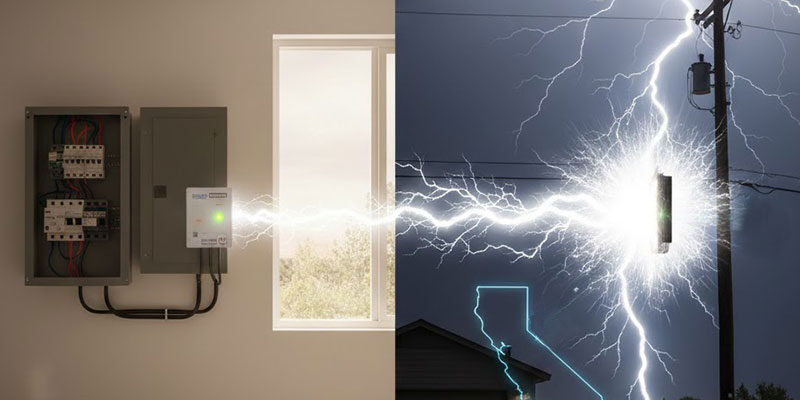
Whole-house surge protectors install at your main electrical panel, protecting your entire home through all circuits. Every outlet, every hardwired appliance, every light fixture—everything is protected. These are professional-grade devices with high joule ratings, typically 40,000-80,000+ joules or more. Indicator lights show when protection is active. Professional installation ensures proper connection and grounding.

The Advantages Are Clear

Whole-house protection provides comprehensive coverage for everything in your home. It protects expensive hardwired appliances that point-of-use protectors can’t touch—your HVAC system, refrigerator, dishwasher, water heater, garage door opener, and more. It protects smart home devices throughout your home. It guards against both external surges (from the grid) and internal surges (from your own appliances).

The Reality

Whole-house surge protection is the foundation. Point-of-use protectors can add an extra layer for particularly sensitive electronics like computers. Together, they provide comprehensive protection. But whole-house protection alone is vastly superior to point-of-use protection alone.

From a cost perspective, whole-house surge protector installation typically runs $300-600. Compare that to replacing even one major appliance ($1,000-5,000+) or your HVAC control board ($1,500-3,000), and it’s clear that whole-house protection is insurance that costs pennies on the dollar compared to what it protects.

How Whole-House Surge Protection Works

The technology is elegant in its simplicity. A whole-house surge protector installs at your main electrical panel, connected between the incoming power and your home’s circuits. It monitors voltage constantly, detects surges (voltage spikes above normal levels), and diverts excess voltage safely to ground. This happens in nanoseconds—far faster than surge energy can travel through your home’s wiring to damage connected devices. Normal power continues flowing to your home while surge energy is safely dissipated.

Key Specifications

Professional-grade whole-house surge protectors have joule ratings of 40,000-80,000+ joules, indicating how much surge energy they can absorb. The clamping voltage (the voltage level at which protection activates) and response time (measured in nanoseconds) are also important specifications. We recommend surge protectors appropriate for Sacramento area conditions and your home’s specific needs.

Indicator Features

Quality surge protectors have LED indicator lights showing protection status—you can see at a glance that your protection is active. Some models include audible alarms. You’ll know when your protector needs replacement (they do eventually wear out from absorbing surges, but that means they’re doing their job—protecting your home).

Lifespan

Lifespan depends on surge frequency and magnitude. In the Sacramento area with our specific conditions, typical lifespan is 5-10 years. More frequent or severe surges mean shorter life, but that’s because the protector is absorbing surge energy that would otherwise damage your appliances and electronics. When it’s time to replace the surge protector, that’s a much smaller investment than replacing damaged appliances would have been.

The Installation Process

Whole-house surge protector installation requires a licensed electrician—this is not a DIY project. Installation happens at your main electrical panel, which requires working with live electrical circuits. This is dangerous without proper training, equipment, and licensing.

Here’s what the process involves when you work with Magic Sun Electric:

We start by assessing your electrical panel and system. We recommend an appropriate surge protector based on your home’s needs, panel capacity, and the specific conditions in your area. We professionally install the surge protector at your panel with proper grounding (absolutely critical for effectiveness). We test and verify operation, show you the indicator lights and features, and provide documentation for your records.

The timeline is typically 1-2 hours for installation with minimal disruption to your day. We need to briefly turn off power during certain steps of installation, but we work efficiently to minimize inconvenience. In many cases, we can provide same-day service if you need protection installed quickly.

Surge protector installation can be combined with other electrical work. If you’re doing a panel upgrade or other major electrical project, it’s an excellent time to add surge protection. But don’t wait for another project—the protection pays for itself the first time it prevents surge damage, and that could happen tomorrow.

Cost, Value, and ROI

Let’s talk about the investment and what you’re getting for your money.

The Investment

A quality whole-house surge protector costs $200-400 for the equipment itself. Professional installation typically runs $150-300 for labor. Your total investment is usually $300-600. That’s all it takes to protect your entire home.

What You’re Protecting

The average Sacramento area home contains $20,000-40,000+ in vulnerable electronics and appliances. A single major appliance replacement runs $1,000-5,000+. HVAC system replacement is $5,000-15,000+. Home electronics collectively represent $5,000-15,000+. An EV charger is $500-2,000.

The Math Is Simple

You invest $300-600 in whole-house surge protection. One avoided major appliance replacement saves you $2,000+. One avoided HVAC control board replacement saves you $1,500-3,000. The ROI is obvious—one surge that would have caused damage pays for the protection many times over.

The Insurance Perspective

Yes, homeowners insurance may cover surge damage. But consider your deductible ($500-2,000 typical), potential premium increases after filing a claim, and the hassle of the claims process. Prevention is simply better than insurance recovery. With surge protection, you avoid the damage in the first place.

Sacramento-Specific Value

Given documented PG&E issues, summer grid stress, the concentration of electronics in modern homes, and California’s higher replacement costs for appliances and electronics, surge protection represents particularly strong value for Sacramento and Placer County homeowners. You’re getting insurance you control—protection that’s active 24/7 regardless of what’s happening with PG&E’s grid or the weather.

Long-Term Value

Beyond the financial calculation, there’s peace of mind. You have protection working for you continuously for years. You’re protecting your home’s value—the electronics and appliances in your home are part of your home’s worth. And it’s a one-time investment that provides ongoing protection year after year.

"They installed power to my new gate openers, and for a new carport. This involved underground conduit, wire, and connections. Chad’s on-location consult was prompt and informative, and he continued to remain responsive to my texts when I had several questions. His team did the work timely and gave me good advice. The work appears to be of high quality and I will use them again in the near future for more work I need done."

— Alec S., Granite Bay, CA

Sacramento & Placer County Considerations

Several local factors make whole-house surge protection particularly important for our region:

PG&E service area challenges are well-documented and ongoing. Summer heat creates extreme stress on the electrical grid throughout our region. PSPS events and power restoration procedures create surge situations. Aging infrastructure in established neighborhoods compounds the risk.

Older homes in Carmichael, Fair Oaks, Auburn, and Orangevale typically have no surge protection installed originally. Adding protection is a smart upgrade that safeguards both original and newly installed appliances and electronics.

Modern technology in older homes creates particular vulnerability—smart home devices, EV chargers, and contemporary appliances with sophisticated electronics are all at risk without proper protection.

For homes in Roseville, Granite Bay, and Folsom, property values are high and homes typically contain expensive electronics and appliances. Surge protection protects your investment in your home.

Sacramento’s climate brings its own considerations. Hot summers stress electrical equipment. While less frequent than other regions, we do experience thunderstorms. Wind events can affect power lines and create surge conditions. Year-round protection makes sense in our environment.

How Magic Sun Electric Helps Protect Your Home

With my C10 electrical contractor license and years of experience throughout Sacramento and Placer County, I understand the specific surge protection needs of homes in our region. We stay current on local conditions, PG&E issues, and the best surge protection technology available.

Our approach starts with a free assessment of your surge protection needs. We recommend appropriate surge protectors for your specific home and situation. We provide professional installation at your electrical panel with proper grounding and connection. We test and verify operation, clearly explain your surge protector’s indicator lights and features, and provide documentation for your records.

We serve homeowners throughout Sacramento and Placer County—from Sacramento to Auburn, Roseville to Folsom, Lincoln to Rancho Cordova, and everywhere in between. Whether you’re in an older home in an established neighborhood or a newer home in a growing area, we can protect your investment.

Professional installation is essential for surge protection. Working in a live electrical panel is dangerous without proper training and equipment. Proper equipment selection ensures adequate protection for your home. Correct installation and grounding are critical for effectiveness. Code compliance protects your investment. Manufacturer warranty protection requires professional installation. And ultimately, professional installation gives you peace of mind that your home is truly protected.

Learn more about our surge protection services on our electrical services page, or visit our FAQ & Resources for additional information about protecting your home’s electrical systems.

Don’t Wait for Damage to Happen

Power surges are a real threat to Sacramento area homes. The combination of PG&E infrastructure challenges, extreme summer conditions, and homes packed with sensitive electronics creates genuine risk. Modern homes have more at risk than ever before—tens of thousands of dollars in vulnerable appliances and electronics.

Whole-house surge protection is affordable insurance—a few hundred dollars protects your entire home. One surge event can cost thousands in damage to appliances and electronics. Professional surge protection installation costs hundreds, lasts for years, and provides continuous protection.

The question isn’t whether your home will experience power surges—it will. The question is whether you’ll have protection in place before expensive damage occurs.

Don’t wait for a surge to damage your expensive electronics and appliances. Let’s protect your home with professional whole-house surge protection. We offer free assessment of your surge protection needs, professional installation typically completed the same day, affordable protection for your entire home, and most importantly, peace of mind every time weather threatens or PG&E has issues.

Call Magic Sun Electric at (916) 794-0448 or contact us by email to schedule your surge protection installation. Protect your investment in your home before the next surge event—because the next surge could happen today.

Your home is full of expensive, sensitive electronics and appliances. For a few hundred dollars, you can protect everything. That’s not an expense—it’s smart insurance that pays for itself the first time it prevents damage. Let’s make sure your home is protected.


Brandon is a C10 licensed electrical contractor (License #953640) and NABCEP certified professional with Magic Sun Electric. With extensive experience protecting Sacramento and Placer County homes from power surge damage, he helps homeowners safeguard their investments with professional whole-house surge protection installation.