
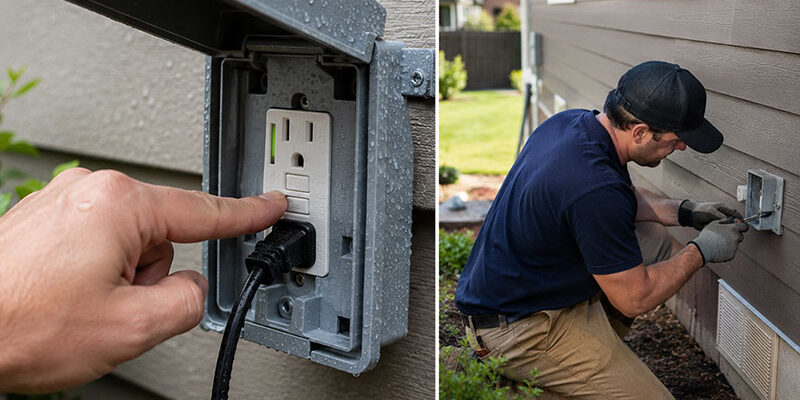
Exterior Outlet Installation

Exterior Outlet Installation: Sacramento Code, Permits, and Planning

A well-placed exterior outlet changes how you use your backyard. It powers tools, lighting, patio speakers, outdoor kitchens, and everything else that makes an outdoor space actually usable, and it does it without a single extension cord snaking across the yard.

But adding an outdoor receptacle is more than cutting an opening in a wall and connecting to the nearest indoor outlet. We have to think through circuit capacity, grounding, GFCI protection, weather exposure, approved wiring methods, physical protection, permit requirements, and what the outlet will actually be powering, both now and down the road.

That planning matters most when the outlet is meant for high-demand appliances, a detached structure, a pool or spa, an outdoor kitchen, or anything that will stay plugged in for long stretches of time.

Why Exterior Outlet Installation Requires Careful Planning

A lot of homeowners come to us with a location already picked out, but no real plan for what’s going to plug into it. That usually ends with a receptacle that’s inconveniently placed, wired to an already-busy circuit, or simply not built for the equipment that ends up using it.

Before we start any exterior outlet installation, we like to work through a few questions with the homeowner:

  • What equipment will use the outlet?
  • How much power will that equipment require?
  • Will the use be temporary, seasonal, frequent, or continuous?
  • Will the outlet be exposed to rain or irrigation?
  • Could a connected cord cross a walkway or landscaped area?
  • Is the location close to a pool, spa, fountain, or other water source?
  • Will a dedicated circuit be needed?
  • Could landscaping, vehicles, or tools damage the outlet?
  • Are additional electrical projects planned for the same area?

The answers shape everything that follows, including the location, the circuit, the wiring method, the enclosure, and the protective devices.

Sacramento Electrical Code Requirements for Outdoor Outlets

Electrical work in the Sacramento area falls under the California Electrical Code, along with locally adopted requirements and administrative procedures. The National Electrical Code lays the groundwork for a lot of these standards, but permits and inspections are handled by whichever authority has jurisdiction over your particular property.

That authority might be the City of Sacramento, Sacramento County, Placer County, or another incorporated city nearby. It’s worth confirming the requirements for your property’s actual location rather than assuming every project in the greater Sacramento area follows the same permitting process, because that’s not always the case.

GFCI Protection

Outdoor receptacles generally require ground-fault circuit-interrupter protection. That GFCI can be built into the receptacle itself, located earlier on the same branch circuit, or provided through a circuit breaker in the panel.

GFCI protection interrupts power the moment electricity starts traveling along a path it shouldn’t be on. That matters a lot outdoors, where people are often in contact with wet concrete, soil, metal equipment, or water.

Our companion article on outdoor GFCI outlets and weatherproofing walks through how this protection works, how to test it, and why outdoor devices sometimes trip during rain.

Weather-Resistant Receptacles

Receptacles installed in exterior damp or wet locations have to be suitable for that environment. Weather-resistant receptacles are commonly identified by a “WR” marking, and they’re built with materials designed to hold up better against moisture, corrosion, sunlight, and temperature changes.

Ground-fault protection and weather resistance do two different jobs. A GFCI responds to an electrical imbalance, while a weather-resistant device is built to physically endure outdoor conditions over time.

Weatherproof Boxes and Covers

The receptacle needs to sit in an approved electrical box with a properly fitted cover and gasket. Which cover is right depends partly on whether the outlet will only be used occasionally or stay connected to equipment.

When a cord is going to stay plugged in, a while-in-use cover protects the connection while still letting the cord exit the enclosure. A flat cover that’s only weatherproof when closed doesn’t offer much protection while it’s actually being used.

Grounding and Circuit Protection

Exterior outlets have to be properly grounded and tied to correctly sized conductors and overcurrent protection. Installing a bigger breaker to handle more demand, without first verifying the wiring can actually support it, is a shortcut that leads to real problems.

We always evaluate the existing panel and branch circuit before adding new loads. Older homes in particular tend to have limited capacity, crowded panels, aging wiring, or circuits that already serve several indoor and outdoor areas at once.

If you’re dealing with limited capacity or breaker problems that keep coming back, our guide on signs an electrical panel may need an upgrade is worth a read.

Tamper-Resistant Receptacles

Tamper-resistant receptacles are also commonly required in residential settings. These have internal shutters that help keep foreign objects from being pushed into just one slot, and they’re identified by a “TR” marking.

The right combination of GFCI protection, weather resistance, tamper resistance, enclosure, and cover comes down to current code and the outlet’s specific location. It’s rarely one-size-fits-all.

Does Adding an Outdoor Outlet Require a Permit?

Often, yes. Adding a new receptacle, extending a branch circuit, installing new wiring, trenching for underground power, or adding a dedicated circuit can all require an electrical permit and inspection. The exact requirements vary by jurisdiction and the scope of the project.

Replacing a damaged device in the same location may be treated differently from installing new wiring or changing a circuit. Don’t assume a small project is automatically exempt just because it looks minor from the outside.

Why Electrical Permits and Inspections Matter

It’s easy to think of permits as just paperwork, but the process actually serves a real purpose:

  • It documents electrical improvements to the property.
  • It allows concealed wiring to be inspected before walls or trenches are closed.
  • It confirms that required protective measures were included.
  • It can help prevent complications during a future sale or insurance claim.
  • It provides independent review of work involving shock and fire hazards.

A licensed electrician who knows the local jurisdiction can tell you whether a permit is needed and coordinate inspections when it is.

Understanding the Authority Having Jurisdiction

The phrase “authority having jurisdiction” refers to whichever local agency is responsible for interpreting and enforcing the building and electrical requirements that apply to your property.

A Sacramento mailing address doesn’t always mean a property falls within the City of Sacramento. It might sit in unincorporated Sacramento County or another nearby jurisdiction, and that distinction can change the application process, fees, inspections, and adopted amendments that apply to your project.

Choosing the Best Location for an Exterior Outlet

Code compliance sets the minimum safety bar, but good planning also accounts for convenience and how people actually use the space.

An outlet should be reachable without running cords across doorways, steps, paths, or wherever people tend to gather. It also needs to stay visible once landscaping fills in, and reasonably protected from sprinklers, vehicles, lawn equipment, and other everyday sources of damage.

Patios and Outdoor Living Areas

Patio outlets typically support lighting, small appliances, televisions, speakers, fans, laptop chargers, and cleaning equipment. Placing receptacles near where furniture or equipment will actually sit helps keep cords off the walking path.

Covered patios still need components suitable for the damp or wet conditions they actually experience. Roof coverage alone doesn’t turn an outdoor location into an indoor one.

Outdoor Kitchens and Barbecue Areas

Outdoor kitchens can require several circuits for refrigerators, beverage coolers, grills, warming equipment, lighting, ventilation, and general convenience receptacles.

This kind of planning should start before counters, cabinets, masonry, or plumbing go in. Doing it early lets us place outlets and dedicated circuits according to the actual equipment specs, while keeping cords away from heat and water.

Gardens and Landscaping

Well-placed outlets can support landscape maintenance, irrigation controls, water features, holiday decorations, and outdoor lighting. It helps to choose locations with future plant growth and irrigation coverage already in mind.

If you’re planning illumination rather than general-purpose power, our guide to outdoor lighting design for Sacramento properties is the better starting point.

Garages, Sheds, and Workshops

A detached garage, shed, or workshop often needs more than a simple extension of an existing circuit. Tools, lighting, refrigeration, battery chargers, ventilation, and future equipment add up to meaningful electrical demand fast.

Depending on the structure and how it’ll be used, this can involve a feeder, subpanel, disconnecting means, grounding provisions, trenching, and multiple branch circuits.

Similar planning applies to accessory dwelling units. Our guide to ADU electrical requirements in Greater Sacramento covers how load calculations, panels, circuits, permits, and inspections factor into a larger residential addition.

Driveways and Vehicle Areas

Outlets near driveways come in handy for power tools, vacuums, maintenance equipment, or occasional Level 1 vehicle charging. That said, an ordinary receptacle shouldn’t be mistaken for a properly planned charging solution.

If you’re regularly charging an electric vehicle, it’s worth having a dedicated installation designed around the vehicle and your panel’s available capacity. Magic Sun Electric provides EV charging station installation throughout Greater Sacramento and Placer County.

When an Outdoor Outlet Needs a Dedicated Circuit

A new outlet can sometimes tie into an existing branch circuit, but that doesn’t automatically make it the right call. It comes down to the existing load, circuit rating, wiring, equipment requirements, and how the outlet will actually be used.

Equipment that often needs dedicated or specially planned power includes:

  • Outdoor refrigerators and freezers
  • Electric grills and cooking appliances
  • Patio heaters
  • Pool and spa equipment
  • Pumps and water features
  • Workshop tools and compressors
  • Motorized gates
  • Large landscape lighting systems
  • Electric vehicle charging equipment

Large appliances often come with manufacturer instructions that spell out voltage, amperage, circuit size, GFCI protection, disconnects, or hardwired connections. We design around those specific requirements rather than treating every outdoor load the same way.

For a broader look at circuit planning, see our article on dedicated circuits and GFCI outlets.

Safe Outdoor Wiring Methods

Wiring approved for dry indoor walls isn’t automatically approved for exterior, underground, or wet locations. Outdoor wiring methods have to account for moisture, sunlight, temperature, corrosion, and physical damage all at once.

Above-Ground Conduit and Wiring

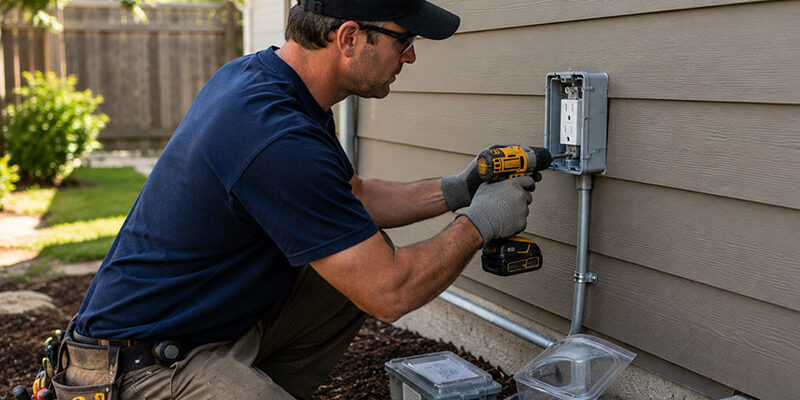
Surface-mounted exterior wiring generally requires approved conduit, fittings, boxes, and conductors. The conduit has to be properly supported and protected anywhere it could be struck by yard equipment, tools, vehicles, or stored materials.

Fittings and transitions matter just as much as the conduit itself. An installation can still let moisture in even when the visible conduit looks perfectly intact.

Underground Electrical Wiring

Underground raceways are treated as wet environments because moisture can enter through condensation or the surrounding soil. Conductors and cable have to be rated for that application.

Burial depth and protection requirements vary depending on the wiring method, circuit characteristics, and location. Wiring often needs extra protection where it comes up out of the ground or passes through areas exposed to damage.

We also factor in:

  • Irrigation lines
  • Drainage systems
  • Tree roots
  • Future landscaping
  • Driveways and vehicle traffic
  • Other buried utilities

Underground utilities should always be located before digging starts, and a permit and inspection may be required before a trench gets filled back in.

Wiring Through Exterior Walls

Penetrations through siding, stucco, masonry, or other exterior materials need to be done carefully. The electrical box has to be secure, and the opening has to be protected against water intrusion without trapping moisture inside the wall or enclosure in the process.

Exterior wall construction can significantly affect how long the job takes. Access is often straightforward when an indoor receptacle sits directly behind the proposed outdoor outlet, but the existing circuit still needs to be evaluated before we extend it.

Outdoor Outlets Near Pools, Spas, and Water Features

Pools, spas, fountains, and similar installations come with additional electrical requirements that go well beyond receptacle covers and GFCI devices. Depending on the setup, these can include separation distances, bonding, grounding, disconnects, equipment ratings, wiring methods, and specialized protection.

Outdoor electrical work near water should be planned as part of the complete pool, spa, or water-feature system, not added on later just for convenience without checking how the location relates to the water and its equipment.

Manufacturer requirements and the local inspector’s interpretation both come into play here too, which is why we don’t apply universal placement measurements to every project without confirming the current code and actual installation conditions first.

Common Exterior Outlet Installation Mistakes

A receptacle can look and act completely normal while still being improperly installed underneath. The mistakes we see most often include:

  • Extending an already overloaded circuit
  • Installing an indoor receptacle in an exterior location
  • Failing to provide or verify GFCI protection
  • Using an unsuitable box, gasket, or cover
  • Installing a flat cover where equipment remains plugged in
  • Using conductors or cable not approved for a wet location
  • Failing to protect exposed conduit from physical damage
  • Using an oversized breaker for existing wiring
  • Placing an outlet in the direct path of irrigation
  • Installing it where cords cross a walkway
  • Ignoring permit and inspection requirements
  • Adding power without considering future outdoor equipment

Another mistake we run into often is assuming any outlet can support any appliance. A receptacle can have the correct plug configuration while the circuit behind it lacks the capacity the equipment actually needs.

Extension Cords Are Not a Permanent Solution

If you find yourself constantly reaching for outdoor extension cords, that’s usually a sign the property needs additional permanent outlets. Cords routed through doors, windows, landscaped areas, or walking paths are vulnerable to damage and create real tripping hazards.

A permanent exterior outlet installation puts power exactly where it’s needed, with the grounding, weather protection, and circuit capacity to match.

Until permanent power is in place, stick to outdoor-rated extension cords used only temporarily and within their listed capacity. Keep connections away from standing water, and retire damaged cords instead of taping them up and putting them back into service.

What Affects Exterior Outlet Installation Cost?

The cost of adding an exterior outlet depends on a lot more than the receptacle itself. Two installations that look nearly identical from outside can require very different amounts of labor and material.

The biggest cost factors we account for include:

  • Distance from the electrical panel or available circuit
  • Whether an existing circuit has adequate capacity
  • Need for a new dedicated circuit
  • Accessibility above ceilings, beneath floors, or inside walls
  • Stucco, masonry, siding, and other exterior materials
  • Surface-mounted conduit versus concealed wiring
  • Trenching and underground wiring
  • Required weatherproof boxes and covers
  • Panel capacity and available breaker spaces
  • Permit and inspection requirements
  • Distance from pools, spas, or water features
  • Repairs needed after previous improper work

The cheapest location isn’t always the best one. An outlet placed purely to minimize labor, but that leaves cords crossing the patio every time it’s used, tends to be a decision homeowners regret later.

Planning for Future Outdoor Electrical Needs

Outdoor projects tend to happen in stages. A homeowner might start with a single receptacle for tools, then add lighting, a patio cover, outdoor cooking equipment, a spa, a workshop, or an EV down the line.

Talking through your future plans with us upfront can save you from paying for the same work twice. Sometimes it makes sense to run extra conduit, choose a smarter circuit route, reserve panel capacity, or position outlets so they can support improvements you haven’t made yet.

Smart switches, timers, sensors, and automated controls can also be worked into some exterior electrical projects. Our overview of smart home electrical systems covers how connected controls can improve convenience, scheduling, security, and energy management.

If you’re planning broader improvements, it’s also worth reviewing the electrical upgrades that can improve property value. Safe, conveniently located outlets might be a small part of a larger project, but they make a real difference in how usable an outdoor space actually is.

Frequently Asked Questions About Exterior Outlet Installation

Can an exterior outlet be connected to an indoor outlet?

Sometimes, by extending an existing branch circuit, but we always evaluate the circuit type, wiring, grounding, capacity, protective devices, and current load first. Physical proximity to an indoor outlet doesn’t make it an appropriate power source on its own.

Does every exterior outlet need its own circuit?

No, not always. General-purpose outdoor receptacles can sometimes share a suitable branch circuit. High-demand appliances and equipment, on the other hand, may need dedicated circuits based on electrical load, code requirements, or manufacturer instructions.

Do I need a permit to add an outdoor outlet in Sacramento?

Often, yes. New wiring, circuit extensions, and dedicated circuits may all require permits and inspections. It depends on the project and whether the property falls under the City of Sacramento, Sacramento County, Placer County, or another local jurisdiction.

Can an outlet be installed directly on stucco?

Yes, but the box has to be securely mounted, and the installation has to protect the wall penetration from moisture. Uneven or damaged stucco can make proper mounting and sealing noticeably harder.

Can I add an outlet to a detached shed?

Yes, though powering a detached structure can involve underground wiring, a feeder or branch circuit, grounding, a disconnect, permits, and protection from physical damage. The right approach depends entirely on how the structure will be used.

Can I use an outdoor outlet for an electric vehicle?

Some vehicles can charge from an appropriate 120-volt receptacle, but continuous vehicle charging places real demand on a circuit. The receptacle, wiring, circuit capacity, and manufacturer requirements all need to be evaluated first. Regular charging is better handled as a dedicated EV charging project rather than an incidental use of an outdoor outlet.

How many outdoor outlets should a home have?

Code sets a minimum, but the right number really depends on your property size and how you use the outdoor space. Strategic placement can cut down on extension cord use and support patios, front yards, gardens, workshops, and seasonal lighting.

Can I install an exterior outlet myself?

We’d steer you away from it. Exterior electrical work carries real risks around shock, fire, moisture intrusion, grounding, circuit loading, and code compliance. New wiring and circuit modifications should go to someone qualified to evaluate the complete installation and pull the required permits.

Professional Exterior Outlet Installation in Sacramento

A properly installed outdoor receptacle should give you convenient power without introducing unnecessary risk. That takes the right location, circuit capacity, GFCI protection, grounding, weather-resistant components, enclosure, cover, and wiring method, all working together.

Magic Sun Electric provides exterior outlet installation, dedicated circuits, GFCI upgrades, electrical troubleshooting, outdoor lighting power, and related electrical services throughout Greater Sacramento and Placer County.

Before we install anything, we evaluate how the outlet will be used, the condition and capacity of your existing electrical system, the site’s exposure to weather, and the requirements of your local jurisdiction. That planning is what makes sure the finished installation works well today and is ready for whatever outdoor projects come next.
Outdoor GFCI Outlets

Outdoor GFCI Outlets: Weatherproofing, Testing, and Electrical Safety

Outdoor outlets get a lot of use around here. They power tools, string lights, patio speakers, holiday decorations, and just about everything else that makes a backyard livable. But every outdoor outlet has one thing working against it that indoor outlets never deal with: moisture. Rain, irrigation, condensation, sun, and everyday physical wear all take a toll on exterior electrical components in ways most homeowners never think about until something stops working.

We tell our customers the same thing every time this comes up: a plastic cover over a standard receptacle is not a safe outdoor outlet. The receptacle, the box, the cover, the wiring, the grounding, and the circuit protection all have to be right for the location. Knowing what “right” looks like can help Sacramento-area homeowners catch a problem before it turns into a shock hazard, a fried appliance, or a dead circuit.

Why Outdoor Electrical Outlets Need Additional Protection

Indoor outlets live in dry, climate-controlled rooms. Outdoor outlets don’t get that luxury. Even a receptacle tucked under a patio cover can end up dealing with wind-driven rain, sprinkler overspray, condensation, dust, insects, and wide temperature swings over the course of a year.

There’s also a bigger safety factor at play outside: grounded surfaces. Someone using a power tool or extension cord outdoors is often standing on wet concrete, damp soil, grass, or a metal ladder. If current escapes from damaged wiring or equipment, that person’s body can become part of the path it travels on its way to the ground. It’s a big reason we take outdoor electrical work as seriously as we do.

In our experience, outdoor electrical problems usually trace back to one of these causes:

  • Moisture entering a receptacle or electrical box
  • Cracked, missing, or poorly fitted outlet covers
  • Corroded terminals and wiring connections
  • Damaged extension cords or outdoor equipment
  • Loose receptacles and deteriorated mounting surfaces
  • Overloaded circuits serving several outdoor devices
  • Indoor electrical products being used outside
  • Landscape tools, vehicles, rodents, or vegetation damaging wiring

What Is a GFCI Outlet?

A ground-fault circuit interrupter, or GFCI, is one of the most important safety devices in a home’s electrical system. It continuously compares the amount of current flowing out through a circuit to the amount coming back in.

The instant it detects even a small imbalance, it cuts power. That imbalance usually means electricity has found a path it shouldn’t be on, possibly through water, damaged equipment, or a person.

GFCI protection matters even more outdoors because water and grounded surfaces raise both the likelihood and the severity of a shock.

GFCI Protection Versus a Circuit Breaker

A standard circuit breaker and a GFCI do two different jobs. A breaker protects the wiring itself from excessive current caused by an overload or short circuit. A GFCI responds to current escaping from its intended path, which is a different kind of danger entirely.

You typically need both. A circuit breaker is not a substitute for required GFCI protection, and vice versa.

For a closer look at overloaded circuits, short circuits, and other breaker problems, read our guide to why circuit breakers keep tripping.

Does Every Outdoor Outlet Have TEST and RESET Buttons?

Not necessarily, and that catches a lot of homeowners off guard. An outdoor receptacle can be fully GFCI protected even without visible TEST and RESET buttons. Protection may come from:

  • A GFCI receptacle at that location
  • Another GFCI receptacle installed earlier on the same circuit
  • A GFCI circuit breaker in the electrical panel

One correctly wired GFCI device can protect several receptacles downstream of it. Those downstream outlets should still be tested to confirm the protection is actually working. If you’re not sure where your GFCI protection is coming from, that’s exactly the kind of thing one of our electricians can trace for you.

How to Test an Outdoor GFCI Outlet

GFCI devices should be tested according to the manufacturer’s instructions, and it’s a habit worth building. Homeowners can run a basic functional test without removing the receptacle or opening the electrical box.

  1. Make sure the outlet and surrounding area are dry.
  2. Inspect the receptacle and cover for visible damage.
  3. Plug in a small lamp or an approved outlet tester.
  4. Press the TEST button on the GFCI device.
  5. Confirm that power to the protected outlet shuts off.
  6. Press RESET and verify that power returns.

If a GFCI fails to trip, won’t reset, feels warm, makes noise, or shows any sign of water intrusion, stop using it. Those are all symptoms that need a closer look, not a reason to shrug it off.

What If the Outdoor GFCI Will Not Reset?

A GFCI that won’t reset doesn’t automatically mean the receptacle has failed. Often, it’s responding to something else happening on the circuit.

The usual suspects include:

  • The circuit breaker is off or has tripped.
  • Moisture has entered the receptacle, box, or connected equipment.
  • A damaged extension cord or appliance has a ground fault.
  • Another GFCI device earlier on the circuit has tripped.
  • A downstream outlet or wiring connection is damaged.
  • The GFCI receptacle has simply reached the end of its useful life.

Unplug everything connected before trying to reset the device. If it resets only after a particular appliance or cord is disconnected, that’s probably your culprit. A GFCI that keeps tripping shouldn’t be ignored, and it definitely shouldn’t be swapped out for an ordinary outlet just to make the problem go away.

Magic Sun Electric provides electrical troubleshooting and repair for dead outlets, repeated GFCI trips, overloaded circuits, and other residential electrical problems.

Why Outdoor GFCI Outlets Sometimes Trip During Rain

An outdoor GFCI that trips during wet weather may simply be doing its job. Rain or irrigation water reaching an electrical connection can allow a small amount of current to escape, and the GFCI shuts things down before that becomes a bigger problem.

The most common sources of rain-related trips we run into are:

  • A cracked or incorrectly installed outlet cover
  • A damaged gasket between the cover and electrical box
  • Water entering around a wall penetration
  • An outdoor cord connection left exposed to rain
  • Holiday lights or landscape equipment with damaged insulation
  • Corrosion inside the outlet or electrical box
  • Irrigation spray directed toward the receptacle

Resetting the GFCI without fixing the source of the moisture is only a temporary patch. The outlet, cover, box, connected equipment, and downstream wiring may all need a look.

Weather-Resistant Outlets and Weatherproof Covers

GFCI protection, weather resistance, and weatherproof covering are related, but they’re not the same thing. A GFCI reduces shock risk, but it does nothing to keep water out of a receptacle or enclosure that isn’t rated for the location.

What Does WR Mean on an Outlet?

Outdoor receptacles are commonly marked “WR,” meaning weather resistant. These devices are built with materials meant to hold up better against moisture, corrosion, sunlight, and Sacramento’s temperature swings.

A standard indoor GFCI receptacle may still provide ground-fault protection, but that alone doesn’t make it suitable for an outdoor location. The entire installation, not just the receptacle, needs to be rated for its environment.

Weatherproof Electrical Boxes and Gaskets

The outlet needs to be mounted in an electrical box approved for the location, securely installed, with a cover gasket that actually seats against the box or mounting surface.

Uneven stucco, siding, masonry, or deteriorated exterior surfaces can create gaps behind an outlet cover that are easy to miss. Water can also work its way in around the wiring penetration if the job wasn’t sealed correctly. That sealing has to protect the opening without trapping moisture inside the enclosure, which is a balance that’s easy to get wrong.

What Is a While-in-Use Cover?

A while-in-use cover, sometimes called an extra-duty or bubble cover, protects an outdoor receptacle while a cord stays plugged in. Unlike a flat cover that only closes when the outlet is empty, an in-use cover leaves room for the plug and cord while still shielding the receptacle from the weather.

These covers matter most for equipment that tends to stay connected, including:

  • Holiday and decorative lighting
  • Irrigation controllers
  • Water features
  • Patio equipment
  • Outdoor refrigerators
  • Landscape lighting transformers

Planning new landscape or security lighting? Our guide to outdoor lighting design covers fixture selection, placement, controls, curb appeal, and security, while this guide sticks to electrical safety.

Do Covered Patios Still Need Weather Protection?

Yes, in most cases. An outlet beneath a porch or patio roof can still be exposed to damp conditions. Wind carries rain further under an overhang than people expect, irrigation water travels farther than it looks like it should, and temperature swings create condensation on their own.

A roof overhead doesn’t turn an outdoor location into an indoor one. The right receptacle, box, cover, and fittings still depend on the outlet’s actual exposure, not just whether it happens to be covered.

How Sacramento Weather Affects Outdoor Electrical Equipment

Sacramento’s long, hot summers and wet winter stretches put different kinds of stress on outdoor electrical equipment throughout the year.

Heat and Sun Exposure

Direct sunlight gradually weakens plastic covers, cord jackets, seals, and other nonmetallic materials. The repeated heating and cooling also causes materials to expand, contract, loosen, or turn brittle over time.

A cover that looked perfectly fine a few years ago can eventually crack or stop sealing the way it should. South- and west-facing installations tend to take the worst of the afternoon sun.

Rain and Irrigation

Outdoor outlets can go dry for most of the year, which means damage can go unnoticed until the first real rainfall hits. Irrigation systems create their own steady source of moisture, especially after landscaping changes or when a sprinkler head drifts out of alignment.

Vegetation, Pests, and Yard Work

Plants can block access to outlets, trap moisture against equipment, and hide a deteriorated cover from view. Rodents chew through exposed wiring more often than people expect, and lawn equipment or garden tools can strike a box or conduit without anyone noticing until later.

Outdoor outlets should stay visible, accessible, securely mounted, and reasonably shielded from physical damage.

Extension Cords Are Not Permanent Outdoor Wiring

Outdoor-rated extension cords are fine for temporary tasks, but they’re not a substitute for permanent receptacles and branch circuits. A cord left in place for weeks or months is far more likely to get damaged, overloaded, soaked, or routed somewhere it shouldn’t be.

When you do need to run an extension cord outdoors:

  • Use a cord specifically rated for outdoor use.
  • Choose a cord with adequate capacity for the equipment.
  • Inspect it for cuts, crushed areas, damaged insulation, and bent prongs.
  • Keep plug connections away from standing water.
  • Do not run cords through doors or windows where they can be pinched.
  • Do not conceal cords under soil, mulch, rugs, or permanent structures.
  • Avoid connecting multiple extension cords together.
  • Store the cord when the temporary task is complete.

If you find yourself reaching for an extension cord over and over in the same spot, that’s usually a sign the area needs one or more additional outdoor outlets, not a longer cord.

Common Outdoor Outlet Safety Problems

Some outdoor electrical problems are obvious at a glance. Others look completely fine until the outlet is opened up or tested. The issues we see most often include:

  • An ordinary indoor receptacle installed outside
  • An outlet without confirmed GFCI protection
  • A flat cover being used while a cord remains connected
  • A broken cover that no longer closes securely
  • Loose plugs that fall out of the receptacle
  • Rust, corrosion, insects, or debris inside the box
  • Improperly sealed openings through siding or stucco
  • An outlet positioned in the direct path of irrigation
  • Extension cords being used as permanent wiring
  • Several high-demand appliances sharing one circuit
  • Exposed wiring or conduit damaged by landscaping work

Older homes often have outdoor receptacles that were installed under earlier standards or added without much planning at all. That doesn’t mean every older installation needs to be torn out and rebuilt the moment codes change, but unsafe, damaged, or improperly modified electrical work should be corrected.

Warning Signs an Outdoor Outlet Needs Professional Attention

Stop using an outdoor outlet and call an electrician if you notice:

  • Repeated GFCI or circuit breaker trips
  • A TEST or RESET button that does not work
  • Heat, buzzing, crackling, or a burning odor
  • Discoloration, melting, or scorch marks
  • Water, rust, or corrosion inside the cover
  • A receptacle or box that moves when a plug is inserted
  • Intermittent power
  • Loose-fitting plugs
  • Sparks when equipment is connected
  • A missing, cracked, or poorly fitted weatherproof cover

Don’t try to work around repeated trips by removing GFCI protection, installing a bigger breaker, or resetting the device over and over. The safety device is telling you something. It’s worth finding out what.

Outdoor Electrical Safety Checklist

  • Test outdoor GFCI devices according to manufacturer instructions.
  • Make sure exterior receptacles remain dry, clean, and accessible.
  • Replace cracked or damaged covers.
  • Look for rust, looseness, discoloration, or insect activity.
  • Keep sprinklers directed away from electrical equipment.
  • Trim vegetation away from outlets, conduit, and electrical boxes.
  • Use only outdoor-rated cords, lights, and appliances.
  • Disconnect temporary cords and seasonal decorations when no longer needed.
  • Avoid electrical equipment when standing in wet areas.
  • Have recurring trips and intermittent power professionally diagnosed.

It’s also worth inspecting outdoor outlets before hanging holiday decorations or reconnecting equipment that’s been sitting unused for months. Our winter electrical safety guide covers more on seasonal loads, extension cords, decorations, and wet-weather electrical concerns.

Frequently Asked Questions About Outdoor GFCI Outlets

Do outdoor outlets need GFCI protection?

Yes, in nearly every case. Outdoor receptacles generally require GFCI protection because of their exposure to moisture and grounded surfaces. That protection can come from the receptacle itself, an upstream GFCI device, or a GFCI circuit breaker.

Can one GFCI protect multiple exterior outlets?

It can. A properly wired GFCI device can protect additional downstream outlets. We still recommend testing each protected outlet individually so you know which device controls it and where to go to reset power.

Can a regular GFCI receptacle be installed outside?

GFCI protection by itself doesn’t make a receptacle suitable for outdoor exposure. The receptacle needs to be rated for the location and installed with the right electrical box, gasket, cover, and wiring method to go with it.

Why does my GFCI trip whenever it rains?

Moisture is likely reaching the outlet, electrical box, connected equipment, or another point downstream. Damaged extension cords and seasonal lighting can cause the same thing. The right move is to find the source rather than keep resetting the device.

Does an outlet under a patio roof need weather protection?

Usually, yes. It can still be exposed to damp conditions, condensation, irrigation, or wind-driven rain. Being covered doesn’t automatically qualify a location for ordinary indoor electrical components.

How long does an outdoor GFCI outlet last?

That depends on product quality, use, weather exposure, installation conditions, and electrical events over its life. We’d rather test a device than guess its age. A GFCI that fails its test or behaves oddly should be evaluated and replaced when needed, regardless of how old it is.

Should I replace a GFCI that keeps tripping?

Not until you know why it’s tripping. The device itself may be defective, but it may also be doing exactly what it’s supposed to do in response to moisture, damaged equipment, or a wiring fault.

When to Contact an Outdoor GFCI Electrician

Homeowners can visually inspect and test accessible GFCI devices on their own, but repairs involving wiring, electrical boxes, circuit protection, or moisture intrusion should go to a qualified electrician.

An outdoor GFCI electrician can confirm whether an outlet has proper ground-fault protection, inspect the weatherproofing, trace upstream and downstream connections, diagnose repeated trips, and recommend the right fix based on the outlet’s location and how it’s actually used.

Magic Sun Electric provides GFCI outlet installation, exterior electrical repairs, circuit troubleshooting, dedicated circuits, and other residential electrical services throughout Greater Sacramento and Placer County.

Properly protected outdoor power makes patios, yards, workshops, and landscaping more convenient without ignoring the risks that come with water and weather. If an exterior outlet is damaged, unreliable, or not adequately protected, it’s better to address it now than to discover the problem in the middle of the next rainstorm or outdoor project.

Magic Sun Electric Blog Post

Outdoor Lighting Design: How to Enhance Security and Curb Appeal for Your Sacramento Property

Your home after dark tells a story. Is it an inviting, well-lit property that showcases beautiful landscaping and says “welcome home”? Or is it a dark, shadowy space with potential hiding spots that makes you uncomfortable pulling into the driveway? Outdoor lighting serves a powerful dual purpose: it protects your property by deterring crime while simultaneously creating stunning curb appeal that makes your home the most attractive on the block.

I’m Brandon from Magic Sun Electric, and outdoor lighting is one of the most impactful upgrades we install for Sacramento and Placer County homeowners. The transformation is immediate and dramatic—properties go from forgettable to memorable, from vulnerable to secure, from unused after dark to fully enjoyed evening spaces.

Whether you’re in a charming Carmichael bungalow, an established Fair Oaks property with mature landscaping, or a Granite Bay estate with extensive grounds, the right outdoor lighting design enhances both security and beauty. Let me walk you through the benefits, design principles, technology options, and Sacramento-specific considerations that will help you create outdoor lighting that truly transforms your property.

The Security Benefits of Proper Outdoor Lighting

Well-lit properties are demonstrably less attractive to criminals. Studies consistently show that outdoor lighting reduces property crime by eliminating hiding spots, making suspicious activity visible, and creating the perception of occupancy and vigilance. Darkness provides cover—lighting removes that advantage.

Strategic Security Lighting Areas

The most critical areas for security lighting are all entry points including front doors, back doors, and side gates. Your garage and driveway need illumination for safe vehicle access and to eliminate dark corners where someone could hide. Side yards and pathways that could provide access to backyards or hidden areas require attention. Any dark corners and potential hiding spots around your property should be addressed. Pool and backyard areas, while primarily recreational, also benefit from security lighting. And don’t overlook detached structures like sheds, workshops, or accessory buildings.

Motion-Sensor Technology for Detection

Motion-activated lights provide an excellent security solution. When movement is detected, lights activate immediately, startling potential intruders and alerting you to activity around your property. They’re energy efficient since they’re only illuminated when needed, and modern sensors offer adjustable sensitivity and duration settings to minimize false activations from small animals or blowing vegetation.

The Strategic Combination

The most effective approach combines always-on lighting in key areas with motion-activated lights in secondary zones. Entry areas benefit from always-on lighting that creates a welcoming appearance and ensures safe navigation. Secondary areas like side yards and back corners work well with motion activation that provides detection without constant illumination. Path lighting typically uses dusk-to-dawn sensors for continuous safe navigation.

Throughout Sacramento and Placer County—from established neighborhoods in Fair Oaks and Carmichael to newer developments in Roseville and Folsom—proper outdoor lighting enhances security. Dark properties are vulnerable properties, regardless of neighborhood.

Curb Appeal: First Impressions Matter

Security is critical, but outdoor lighting also creates stunning aesthetic impact that extends far beyond safety concerns. The first impression visitors and potential buyers get of your property happens before they reach your front door—outdoor lighting shapes that impression dramatically.

Professional outdoor lighting extends your enjoyment of outdoor spaces well into the evening, particularly valuable during Sacramento’s long summer days. It highlights architectural features you’ve invested in—columns, facades, stonework. It showcases your landscaping investment, making mature trees and garden beds visible and dramatic after dark. Quality outdoor lighting genuinely increases property value, especially in higher-end markets like Granite Bay, Folsom, and El Dorado Hills where buyers expect sophisticated exterior illumination.

Key Areas for Aesthetic Enhancement

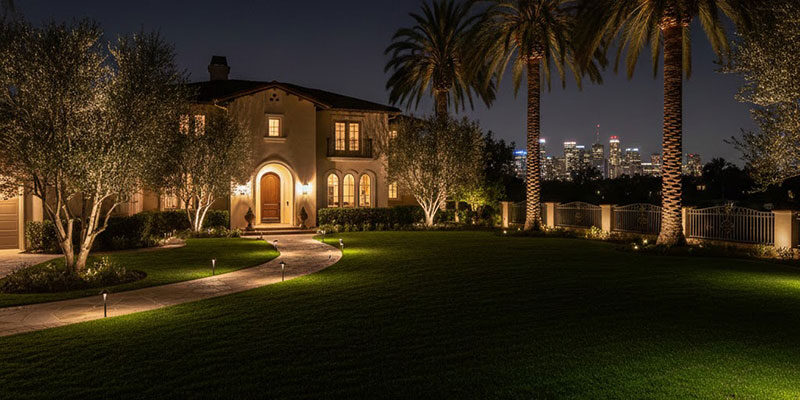
Focus lighting on architectural features that deserve attention—columns, interesting facades, stone or brickwork, and unique design elements. Mature trees and landscape focal points become stunning features when properly lit. Pathways and walkways serve both safety and aesthetic purposes, guiding the eye through your landscape while preventing trips and falls. Water features like pools, fountains, or ponds create magical focal points when illuminated. Outdoor living spaces including patios and decks become evening destinations with proper lighting. And garden beds with interesting plantings can be selectively highlighted for depth and visual interest.

The Layering Approach

Professional lighting design uses three layers: ambient lighting provides overall illumination for general visibility, task lighting serves specific functions like cooking areas or seating, and accent lighting highlights particular features for visual impact. All three layers working together create depth, interest, and a sophisticated appearance that single-layer lighting simply cannot achieve.

For homeowners who love outdoor entertaining, proper lighting transforms patios and dining areas into evening destinations. Pool and spa lighting creates ambiance while providing essential safety illumination. Thoughtfully designed landscape lighting sets the mood for gatherings and extends the usable hours of your outdoor investment well past sunset—particularly important during Sacramento’s beautiful summer evenings.

Learn more about our outdoor lighting services on our electrical services page.

Types of Outdoor Lighting and Their Applications

Understanding different lighting types helps you plan effective outdoor illumination.

Path and Walkway Lighting uses low-level fixtures along pathways for both safety and aesthetics, typically spaced every 6-10 feet. Options include bollards, stake lights, and step lights. Landscape and Garden Lighting creates drama with uplights highlighting trees and architecture, downlights mounted in trees or on structures, in-ground well lights for dramatic uplighting, and spotlights for specific focal points.

Security and Floodlighting provides bright illumination for garages, driveways, and side yards. These are often motion-activated and should be positioned carefully to avoid harsh glare. Entry and Porch Lighting at your front door sets the tone for your property—wall sconces and overhead fixtures should be welcoming while providing adequate illumination for safe entry.

Deck and Patio Lighting transforms outdoor living spaces with post cap lights, rail lighting, under-rail fixtures, and step lighting. String lights or permanent overhead fixtures create ambiance for evening entertainment. Pool and Water Feature Lighting includes underwater pool lights and fountain illumination that create stunning focal points and provide essential safety lighting.

Accent and Specialty Lighting techniques include wall washing to illuminate textured surfaces, grazing to highlight stone or brick texture, silhouetting to backlight interesting plantings, and shadowing to create dramatic effects. These advanced techniques distinguish professional installations from basic lighting.

“Magic Sun replaced my kitchen fluorescent lights with Cam lights and installed a ceiling fan. They did a great job. The guys were very knowledgeable, friendly and cleaned up after they were done with the install. I would recommend Magic Sun Electric for any electrical work that you need done.”

— DL D., Wheatland, CA

Design Principles for Effective Outdoor Lighting

Successful outdoor lighting follows key principles that separate professional results from amateur attempts.

Less is often more in outdoor lighting design. Over-lighting makes properties look commercial rather than residential. Strategic placement of fewer fixtures proves more effective than numerous randomly placed lights. Intentional dark spaces between illuminated areas create drama and depth that uniform brightness cannot achieve.

Avoid light pollution by directing light downward wherever possible. Avoid glare into neighbors’ properties—good fences make good neighbors, and so does considerate lighting. Shielded fixtures reduce light trespass and respect dark sky principles.

Color temperature matters significantly. Warm white light (2700-3000K) creates inviting spaces perfect for entertaining areas and entries. Cooler white light (4000K+) works better for security applications where you want maximum visibility. Consistent color temperature throughout your lighting creates visual cohesion. Match your architectural style—warm temperatures complement traditional homes while cooler temperatures suit contemporary architecture.

Highlight, don’t flood with light. Feature specific elements like specimen trees or interesting architecture rather than attempting to illuminate everything uniformly. Not every plant needs lighting—selective illumination creates focal points and visual interest. Leave some mystery in your landscape—you don’t need to see everything at once.

Consider views from inside your home, as lighting that looks good from outdoors must also work from interior viewing points. Avoid positioning bright lights where they’ll shine into windows. Create pleasant views from inside that enhance your enjoyment year-round. Be mindful of window reflections at night that can make poorly positioned lights distracting.

Sacramento’s climate offers unique advantages for outdoor lighting. Long summer evenings mean you’ll use outdoor spaces extensively, and quality lighting extends that enjoyment even further. While our outdoor entertaining season is primarily warm months, winter darkness arrives early, making outdoor lighting valuable year-round.

Technology, Controls, and Professional Installation

Modern outdoor lighting technology offers tremendous advantages over older systems. LED fixtures use 80% less energy than incandescent while lasting 25,000-50,000+ hours. They generate minimal heat—particularly important in Sacramento where summer temperatures regularly exceed 100 degrees. Various color temperatures suit different applications, and dramatically lower operating costs make LED the only sensible choice for new installations.

Smart Control Options

Smart outdoor lighting systems offer WiFi connectivity for smartphone control, voice control integration with Alexa or Google Assistant, scheduling and automation for lights that turn on and off without intervention, and zone control allowing you to operate different areas independently. Traditional options like dusk-to-dawn photocells and programmable timers remain effective for simpler systems.

Motion sensors using passive infrared (PIR) detection offer adjustable sensitivity and timer duration settings. The most sophisticated approach combines motion activation with always-on lighting—motion sensors trigger bright light when activity is detected while ambient lighting provides constant low-level illumination.

Low-Voltage vs. Line-Voltage Systems

Most landscape lighting uses low-voltage systems (typically 12V) requiring transformers to step down from standard 120V household current. These systems are safer for installation around plants and water features. Line-voltage (120V) systems are appropriate for security lighting, structural fixtures, and applications requiring brighter illumination. Each has proper applications, and professional design determines the right approach for different areas of your property.

When Professional Installation Makes Sense

While simple low-voltage landscape lighting kits and solar lights work for basic DIY applications, professional installation is essential for line-voltage (120V) installations, complex designs with multiple zones, integration with your home’s electrical system, ensuring proper wiring and safety, correct transformer sizing and placement, permit and code compliance, and comprehensive lighting plans that achieve both aesthetic and security goals.

Professional electricians bring design expertise about what to light and how to light it effectively. They ensure proper installation for safety and reliability. They use quality materials and fixtures designed for outdoor exposure. Professional work includes warranties and ongoing support. Installation is efficient and code-compliant. The results look professionally designed rather than DIY improvised.

Safety concerns justify professional installation for outdoor electrical systems. Outdoor wiring faces weather exposure requiring proper GFCI protection. Wire burial depth must meet code requirements. Transformer installation involves working with line voltage. These aren’t areas where DIY experimentation makes sense—the safety risks aren’t worth the modest potential savings, and the results of professional installation far exceed what most homeowners can achieve independently.

Sacramento-Specific Outdoor Lighting Considerations

Sacramento’s climate and landscape create unique considerations for outdoor lighting design. Our hot summers with temperatures regularly exceeding 100 degrees from June through September make LED technology particularly valuable—these fixtures generate minimal heat compared to older technologies. Quality fixtures must withstand temperature extremes and resist sun damage over years of exposure.

Sacramento’s long summer days mean daylight extends until 8-9 PM during peak summer, but this extended outdoor living season makes quality outdoor lighting particularly valuable. When darkness finally arrives, you want to continue enjoying your outdoor spaces comfortably and safely.

Landscape Types and Property Considerations

Mediterranean landscaping dominates Sacramento area properties, with drought-tolerant plants, mature trees in established neighborhoods, and native California species creating landscapes distinctly different from other regions. Pool and spa properties are common throughout the area, each requiring specialized lighting approaches. Design outdoor lighting to showcase your specific landscape type and features.

Property considerations vary significantly by area. In established neighborhoods like Carmichael, Fair Oaks, Auburn, and Orangevale, mature trees provide perfect opportunities for dramatic uplighting while older homes often feature architectural character that benefits from accent lighting. Security lighting is particularly important in these established areas.

Newer developments in Roseville, Rocklin, and Lincoln typically feature basic builder-grade outdoor lighting that offers opportunities for significant enhancement. Contemporary designs are popular, and HOA considerations may apply in some communities.

Higher-end areas like Granite Bay, Folsom, and El Dorado Hills typically feature properties where comprehensive landscape lighting is expected rather than optional. Property sizes often allow extensive lighting designs, and sophisticated approaches are common. Curb appeal is particularly important in these competitive markets.

Energy costs under SMUD and PG&E rate structures make efficiency important. LED technology dramatically reduces operating costs compared to older technologies. Smart controls optimize usage patterns. Timer and photocell automation ensures lights operate only when needed, minimizing energy waste while maximizing security and aesthetic benefits.

“Can’t say enough great things about our experience with Magic Sun Electric. From our interaction with Chad on the estimate, scheduling and confirming everything, to the highly competent and professional electricians Kyle & Caleb that did the job. There is no room for improvement here. They arrived on time and were very pleasant. They brought in a shop vac when they were done to clean up a small amount of debris that was hardly noticeable. Their price was better than their competition.”

— Gavin M., West Sacramento, CA

How Magic Sun Electric Approaches Outdoor Lighting Design

We understand that effective outdoor lighting requires both technical expertise and design sensibility. Our approach begins with thorough consultation—we walk your property with you, understand your goals for security and aesthetics, identify key areas and features that deserve attention, and discuss your budget and priorities to create realistic plans.

During design planning, we recommend appropriate fixture types and optimal placement for both function and visual impact. We plan lighting zones and control systems that give you flexibility. We calculate transformer and circuit requirements to ensure reliable operation. Throughout the process, we balance security requirements with aesthetic goals to create lighting that serves both purposes effectively.

Our professional installation follows all code requirements and safety standards. As licensed C10 electricians, we handle all line-voltage work safely and legally. We ensure proper wiring with appropriate GFCI protection for outdoor applications. We select quality fixtures specifically designed for outdoor exposure and Sacramento’s climate. We maintain correct burial depth and wire protection. Our installations are clean and professional, and we handle all necessary permits and inspections.

For smart controls and automation, we set up timers and photocells for automatic operation. We integrate with smart home systems when desired. We configure zone control for operational flexibility. And we ensure you understand how to use smartphone apps and controls for your new lighting system.

We serve the entire Sacramento and Placer County region, from Sacramento to Auburn, Roseville to Folsom, and all communities in between. Whether you need comprehensive landscape lighting design for extensive properties or focused security lighting for specific concerns, we bring both technical expertise and design experience to every project. Visit our FAQ & Resources page for additional information about outdoor electrical systems.

Transform Your Property With Professional Outdoor Lighting

Outdoor lighting transforms properties in ways few other improvements can match. The right lighting design enhances security while creating stunning visual appeal. Strategic design proves far more effective than random placement of numerous fixtures. Modern technology makes control simple and energy costs manageable. Sacramento’s climate and lifestyle make outdoor living spaces central to home enjoyment—quality lighting extends that enjoyment well into evening hours.

Professional installation ensures safety, reliability, and results that DIY approaches simply cannot achieve. The investment in your property’s security, beauty, and value justifies the modest cost of proper outdoor lighting.

Ready to enhance your Sacramento or Placer County property with professional outdoor lighting? Let’s design a lighting plan that improves security while showcasing your home’s best features. We offer free outdoor lighting consultations where we walk your property together, discuss your vision and priorities, provide design recommendations based on your property’s unique characteristics, and deliver transparent estimates with no pressure or obligation.

Whether your primary goal is feeling safer after dark, creating stunning curb appeal that makes neighbors envious, or both, professional outdoor lighting delivers results worth the investment.

Call Magic Sun Electric at (916) 794-0448 or contact us online to schedule your outdoor lighting consultation. Let’s create a lighting design that transforms your property into something truly special—secure, beautiful, and ready to be enjoyed any evening of the year.

Your property deserves to shine after dark. Professional outdoor lighting makes that happen.


Brandon is a C10 licensed electrical contractor (License #953640) and NABCEP certified professional with Magic Sun Electric. With extensive experience designing and installing outdoor lighting systems throughout Sacramento and Placer County, he helps homeowners create properties that are both secure and stunning after dark.