
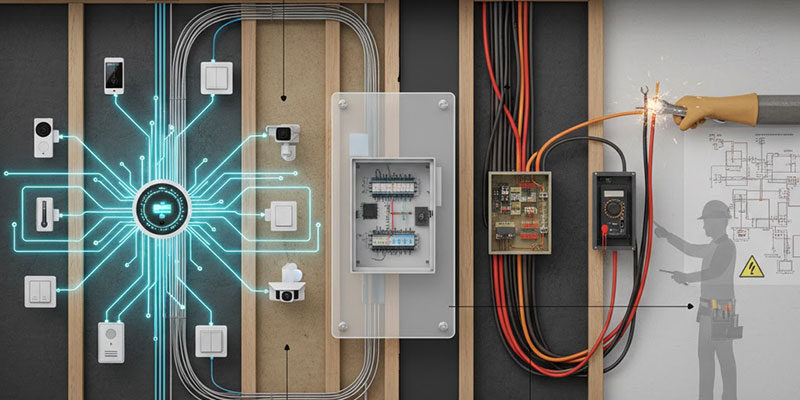
Your phone dims the lights with a tap. Your thermostat learns your schedule and adjusts the temperature before you get home. Your doorbell shows you who’s at the front door—whether you’re in the kitchen or across town. Your voice tells the house "goodnight," and lights turn off, doors lock, and the temperature adjusts for sleeping.
Welcome to the smart home, and it’s no longer the exclusive territory of tech enthusiasts with unlimited budgets. Smart home technology has moved from luxury novelty to mainstream convenience, and homeowners throughout Sacramento and Placer County are discovering how these systems can make daily life easier, more secure, and more energy-efficient.
I’m Brandon from Magic Sun Electric, and smart home electrical installations have become one of our fastest-growing services. Whether I’m working in Roseville, Granite Bay, Folsom, or Auburn, homeowners want to understand what’s possible, what makes sense for their homes, and what actually requires professional installation versus what they can tackle themselves.
Let me walk you through how smart home systems actually work, which upgrades can save you real money (especially important in Sacramento’s expensive summer cooling season), and when you should call a professional electrician versus when you can DIY. My goal is to demystify smart home electrical so you can make informed decisions about your own home.
Smart Home Basics: How These Systems Actually Work
Before we dive into specific systems, let’s understand the fundamentals. Smart home devices use a mix of technologies, but they all share three basic components: a power supply, a communication network, and a control interface.
Power Requirements
Some smart devices simply plug into existing outlets—smart plugs and many cameras work this way. Others replace existing switches or outlets, using the wiring that’s already there. Some require new low-voltage wiring for communication and control. Understanding what your chosen devices need is the first step in planning a smart home.
Communication Methods
Smart home devices talk to each other and to you through various technologies. WiFi is the most common—these devices connect to your home network just like your phone or computer. Bluetooth provides short-range, device-to-device communication. Zigbee and Z-Wave create mesh networks where devices communicate with each other, extending range throughout your home. Hardwired or low-voltage systems use physical wiring for rock-solid communication and control.
There’s also an emerging standard called Matter that’s working to unify these different communication methods, making devices from different manufacturers work together more seamlessly. Compatibility is improving, but it’s still something to consider when building your smart home.
The Control Interface
How do you actually control everything? Most commonly through smartphone apps specific to each device or system. Voice assistants like Alexa, Google Assistant, and Siri let you control things with voice commands. Wall-mounted controllers provide physical control points throughout your home. And the real magic happens with automation routines that run in the background—your lights turn on at sunset, your thermostat adjusts when you leave for work, your security system arms itself at bedtime.
Why does all this matter? Because different smart home systems require different electrical infrastructure. Some are simple plug-and-play that anyone can install. Others need professional electrical work to function properly and safely. Understanding the difference saves you time, money, and frustration.
Smart Home Categories: What’s Available
Let’s explore the main categories of smart home technology and what each requires from an electrical standpoint.
Smart Lighting and Switches
You have two main approaches to smart lighting: smart bulbs or smart switches. Smart bulbs are truly DIY—just screw them into existing fixtures and connect them through an app. They’re perfect for table lamps and anywhere you want to start simple.
Smart switches replace your existing wall switches and control regular bulbs. Some are DIY-friendly if you’re comfortable with basic electrical work, but there’s a critical consideration: many smart switches require a neutral wire, and older homes throughout Carmichael, Auburn, Fair Oaks, and other established neighborhoods often don’t have neutral wires in their switch boxes. A professional can assess your wiring and recommend compatible switches, or add neutral wires where needed.
Dimmers add another layer of complexity—they need to be compatible with LED bulbs (which most modern homes use). Three-way switches (lights controlled from two locations) are even more complex. These are where homeowners often call us after DIY attempts don’t work out.
The benefits make smart lighting popular: energy savings from LEDs combined with automation that prevents lights being left on, convenience of controlling lights from anywhere, and security features like making it look like someone’s home while you’re away.
Smart Thermostats
This is where smart home technology really shines for Sacramento area homeowners. Smart thermostats learn your schedule and preferences, automatically adjusting temperatures for comfort and efficiency. You can control them from anywhere—adjust the AC before arriving home on a hot summer day, or turn down heating when you’re away longer than expected.
Many modern thermostats are reasonably DIY-friendly if you’re replacing a similar thermostat. But HVAC systems vary significantly, and complex systems need professional installation. Many smart thermostats require a "C-wire" (common wire) for continuous power, and older homes may not have this wire run to the thermostat location. Incorrect thermostat installation can damage your expensive HVAC system, which is why this is one area where professionals often get called after DIY attempts fail.
Given Sacramento’s brutal summers where air conditioning runs constantly, a smart thermostat is one of the highest-value smart home upgrades you can make. We’ll talk more about the money-saving potential shortly.
Smart Security Systems
Smart security encompasses doorbell cameras, security cameras (indoor and outdoor), smart locks, and motion sensors. Some components are genuinely DIY—battery-powered cameras just mount where you want them and connect via WiFi. But hardwired cameras need proper wiring, and integrated security systems benefit enormously from professional installation.
POE (Power over Ethernet) cameras are popular for their reliability—they get both power and data through a single network cable. These require proper network wiring throughout your home, which is definitely professional territory.
Home Automation and Control Systems
Whole-home automation systems integrate everything—lighting, climate, security, entertainment—into unified control. You create "scenes" where a single command triggers multiple actions: "Goodnight" turns off all lights, locks doors, arms the security system, and adjusts the thermostat.
These sophisticated systems typically require professional installation. They need low-voltage wiring throughout your home, careful planning of control points and sensors, and extensive programming and setup. This is where smart home technology becomes truly powerful, but it’s not a weekend DIY project.
Structured Wiring (Low-Voltage)
Think of structured wiring as the nervous system of a smart home. Ethernet cables running throughout your home provide reliable network connectivity. Coax cables distribute video. Speaker wire enables whole-home audio. Control wiring connects sensors, keypads, and devices.
This infrastructure is best installed during construction or major remodels when walls are open. Professional installation ensures proper cable types, correct termination, organized home runs to a central location, and everything tested and verified. Poor low-voltage wiring is a nightmare to troubleshoot—professional installation gets it right the first time.
Smart Outlets and Plugs
Smart plugs are the easiest entry into smart home technology—plug them into existing outlets, plug your lamp or device into them, and control everything through an app. Perfect for seasonal decorations, lamps, or anything you want to control remotely.
Smart outlets replace existing wall outlets with smart versions. If you’re comfortable with basic electrical work, these can be DIY projects. If you’re not, a professional ensures code-compliant, safe installation.
Voice Control Integration
Most modern smart devices work with Alexa, Google Assistant, or Apple HomeKit. Hub devices like Amazon Echo or Google Nest coordinate multiple systems. Basic voice control is generally plug-and-play, but whole-home voice control with speakers in multiple rooms benefits from professional planning and installation.
Energy Monitoring
Want to see exactly how much electricity you’re using in real time? Energy monitoring systems can help. Some install at your electrical panel (professional installation required) to monitor your entire home. Others plug into individual outlets (DIY) to monitor specific devices. Knowledge is power—literally—when it comes to reducing energy waste.
"Magic Sun Electric has worked their magic on our home multiple times! I appreciate the ease with which I can make appointments; they are so kind to accommodate my erratic schedule. Electricians always show up reliably and on time; I highly recommend Jim and Tanner. They are tidy in their work, and always clean up, unlike other home contractors."
— Reena S., Sacramento, CA
What You Can DIY vs. What Needs a Professional
Let’s be clear about when you can handle smart home installations yourself and when you should call a professional.
Generally Safe for DIY (If You’re Comfortable):
- Smart bulbs in existing light fixtures
- Smart plugs that plug into existing outlets
- Battery-powered devices like wireless cameras or sensors
- Replacing simple switches if you understand basic electrical wiring and your home has neutral wires
- Simple smart thermostat replacements (similar unit, compatible wiring)
When to Call a Professional:
- Any time you’re uncomfortable or uncertain about electrical work
- Adding new circuits or outlets
- Replacing switches in homes without neutral wires
- Three-way switch installations
- Any low-voltage structured wiring
- Integrated whole-home automation systems
- HVAC system electrical work beyond simple thermostat replacement
- Hardwired security cameras
- Smart panel monitoring systems installed at your electrical panel
- Any work that requires permits
Why Professional Installation Matters
Safety is paramount—electrical work can be dangerous if done incorrectly. Code compliance is required for permits and inspections, protecting your investment and ensuring insurability. Proper function matters too—incorrectly installed smart devices often don’t work right, defeating the purpose. Many manufacturers require professional installation for warranty protection. Professionals save you time by getting installations right the first time, can troubleshoot issues you might not understand, and ensure different systems integrate seamlessly.
Common DIY Mistakes We Fix
I’ve seen smart switches installed without required neutral wires (they simply won’t work). I’ve repaired HVAC systems damaged by incorrect thermostat installations. I’ve fixed incompatible dimmers causing LED bulbs to flicker annoyingly. I’ve replaced poorly terminated network wiring that caused intermittent connectivity problems throughout homes.
I’m genuinely supportive of homeowners doing what they’re comfortable with—smart home technology should be accessible. But I’ve seen too many situations where DIY installations either don’t work right or create actual safety issues. If you’re not sure, call us. We’re happy to answer questions, and if you decide to DIY something we think you can handle, we’ll support that. But for complex installations, professional work pays for itself in reliability and peace of mind.
Smart Home Electrical Upgrades That Actually Save Money in 2025
Not all smart home upgrades are about gadgets and convenience—some deliver genuine financial returns through energy savings. Let’s talk about what actually saves money.
Smart Thermostats: The Clear Winner
According to EPA estimates, smart thermostats can save 10-23% on heating and cooling costs. In Sacramento’s climate where air conditioning runs constantly from June through September, that’s significant money.
Here’s how they save: they learn your schedule and adjust automatically when you’re away, you can control them remotely so you’re never cooling an empty house, they provide detailed energy reports showing usage patterns, and many offer features like geofencing that adjusts temperature based on whether you’re home.
For a typical Sacramento home with $150-200 monthly summer electric bills, a 15% savings means $22-30 per month, or $264-360 per year just during cooling season. The payback period for a smart thermostat is often just 1-2 years. Even better, SMUD and PG&E offer rebates on smart thermostats, reducing your upfront investment. Check our Rebates & Incentives page for current programs.
Smart Lighting
LED bulbs combined with smart controls deliver major savings. Automation prevents lights being left on unnecessarily—no more lights burning all day because someone forgot to turn them off. Dimming capability extends bulb life significantly. Motion sensors in garages, bathrooms, and utility areas mean lights are only on when needed. Outdoor lighting on schedules or sensors prevents all-night operation when it’s not needed.
Typical savings on lighting costs: 20-30% compared to conventional lighting without smart controls.
Energy Monitoring Systems
Real-time visibility into your electricity usage is powerful. Energy monitors help you identify which appliances and behaviors use the most energy, track trends over time to see if changes are working, and catch problems like appliances that are failing and drawing excessive power.
Whole-home energy monitors install at your electrical panel and track everything. Individual outlet monitors track specific devices. Both approaches give you the information needed to make smart energy decisions.
Smart Power Strips and Outlets
Many devices draw power even when turned "off"—this phantom load or vampire power can account for 5-10% of your electric bill. Smart power strips and outlets let you completely cut power to devices when not in use, schedule devices to turn off automatically when you don’t need them, and eliminate waste you didn’t even know existed.
Load Management
Professional smart home systems can manage when high-draw appliances operate, taking advantage of time-of-use electricity rates offered by SMUD and PG&E. Shifting usage to off-peak hours (typically overnight) can reduce costs significantly. This is particularly valuable for Sacramento area residents on time-of-use plans.
The Bottom Line
The average Sacramento home spending $150-200 per month on electricity in summer could save $30-40 per month (15-20%) with smart home energy management—that’s $360-480 per year. A smart thermostat investment pays for itself quickly while continuing to save money year after year. And these upgrades add tangible value when you sell your home.
For more information on home energy management and savings, Energy Star provides excellent resources and calculators.
Sacramento & Placer County Smart Home Considerations
Working throughout the greater Sacramento area, I’ve learned that several local factors affect smart home planning and installation:
Older Homes: Many beautiful homes in Fair Oaks, Carmichael, and Auburn were built decades ago and lack neutral wires in switch boxes, limiting smart switch options without professional upgrades. Professional assessment identifies what’s possible with existing wiring and what upgrades make sense. Remodels are the perfect time to add smart home infrastructure while walls are open.
Climate Factors: Sacramento’s extreme summer heat makes smart thermostats particularly valuable—the potential savings are substantial when AC runs constantly. Remote control means you can adjust temperatures before arriving home, avoiding that initial blast of hot air. Smart outdoor lighting handles our long summer evenings efficiently.
Home Values: Smart home features are increasingly expected by buyers in Roseville, Granite Bay, and Folsom. Younger buyers particularly expect smart home capability. Professional installation provides documented value and avoids issues during home sales.
WiFi Coverage: Larger homes common in Granite Bay and Folsom may need mesh WiFi networks for reliable smart home device connectivity. Some smart home systems create their own mesh networks. Professional network planning prevents connectivity issues that plague poorly planned systems.
Time-of-Use Rates: Both SMUD and PG&E offer time-of-use electricity plans where rates vary by time of day. Smart home systems can optimize for these rates, shifting usage to cheaper off-peak hours. The savings potential is significant for Sacramento area residents willing to adjust usage patterns.
"Top notch contractor experience with Magic Sun Electrical. Had new LED shop lights and two new outlets installed in my garage. My first call to Magic Sun was answered by a live person and I had an inspection and estimate in my hands by the end of the day. Work was performed a week later. Chad and his crew were totally professional. On-time, on-budget, Clean, Quite, Competent and Efficient."
— Larry Welch, Google Review
Planning Your Smart Home: Where to Start
If you’re feeling overwhelmed by options, here’s how to approach smart home planning:
Start with Your Priorities: What problems are you trying to solve? Energy savings? Security and peace of mind? Convenience and comfort? Support for aging in place? Your priorities determine where to start. Focus on one area, get it working well, then expand.
Consider Your Timeline: Building a new home or undertaking major remodeling? This is the perfect time for structured wiring and comprehensive smart home infrastructure. Living in an existing home? Start with easy wins like a smart thermostat and some smart lighting, then expand over time. Smart home systems can grow incrementally—you don’t need everything at once.
Budget Realistically: Smart bulbs and plugs offer low-cost entry points under $50. A quality smart thermostat is a moderate investment of $200-350 with high ROI through energy savings. Whole-home automation systems are significant investments of thousands of dollars but deliver comprehensive control. Professional installation is worth the cost for complex systems—the value is in reliable function and proper integration.
Think Long-Term: Buy quality devices that work together and have good manufacturer support. Consider expansion potential—can you add devices and capabilities over time? Professional consultation helps you plan for future growth without overspending now.
Common Starting Points: Most homeowners start with a smart thermostat for immediate energy savings, add smart lighting in main living areas for convenience and additional savings, install a smart doorbell camera for security and convenience, then expand based on experience and needs.
Get a professional assessment of your home’s smart home readiness. We can evaluate existing wiring, identify what’s possible without major electrical work, recommend upgrades that make sense for your priorities, and help you plan for future expansion. Learn more about our services on our electrical services page.
How Magic Sun Electric Supports Smart Home Projects
With my C10 electrical contractor license and NABCEP certification, I’ve worked on smart home electrical installations throughout Sacramento and Placer County. We stay current on technology trends while focusing on what works reliably and delivers real value.
Our smart home electrical services include: assessing your electrical infrastructure and smart home readiness, installing smart switches and outlets with proper wiring, installing and wiring smart thermostats including adding C-wires where needed, running low-voltage structured wiring for comprehensive systems, wiring and installing security cameras and related equipment, supporting whole-home automation installations with proper electrical infrastructure, upgrading electrical panels to support smart home additions, and troubleshooting and repairing smart home electrical issues.
We work with homeowners planning smart home upgrades, home builders adding smart features to new construction, contractors managing remodeling projects, and DIY enthusiasts who need professional support for complex aspects of their projects.
We serve homeowners throughout Sacramento and Placer County—from Sacramento to Auburn, Roseville to Folsom, Lincoln to Rancho Cordova, and everywhere in between. Whether you’re just starting to explore smart home technology or you’re ready for a comprehensive installation, we provide honest guidance and professional service. Visit our FAQ & Resources page for additional information about electrical systems and home technology.
Make Your Home Smarter—Safely and Effectively
Smart home technology is here, it’s getting better every year, and it’s more accessible than ever. The combination of DIY installations for simple devices and professional installation for complex systems works well for many homeowners. Professional installation ensures safety, proper function, reliable integration, and peace of mind.
The energy savings potential makes smart home upgrades genuine investments rather than just expenses—especially in Sacramento’s climate where cooling costs are substantial. And as smart home features become standard expectations rather than luxury additions, these upgrades protect and enhance your home’s value.
Thinking about adding smart home features to your Sacramento or Placer County home? Let’s talk about what makes sense for your situation. We offer free consultations to assess your home’s electrical system and discuss your smart home goals. There’s no pressure and no obligation—just professional guidance from experienced electricians who’ve helped hundreds of homeowners navigate smart home planning and installation.
Whether you need help planning a comprehensive system, want professional installation of specific components, or have questions about what you can DIY versus what needs professional work, we’re here to help. We’ll help you plan smart home upgrades that fit your budget, serve your priorities, and deliver the convenience, security, and savings you’re looking for.
Call Magic Sun Electric at (916) 794-0448 or contact us online to discuss your smart home project. Let’s make sure your home’s electrical infrastructure is ready to support the smart home technology you want—safely, reliably, and effectively.
Smart home technology should make your life easier and more efficient. Let’s make sure your electrical foundation supports that goal.
Brandon is a C10 licensed electrical contractor (License #953640) and NABCEP certified professional with Magic Sun Electric. With extensive experience in smart home electrical installations throughout Sacramento and Placer County, he helps homeowners integrate modern technology safely and effectively.